

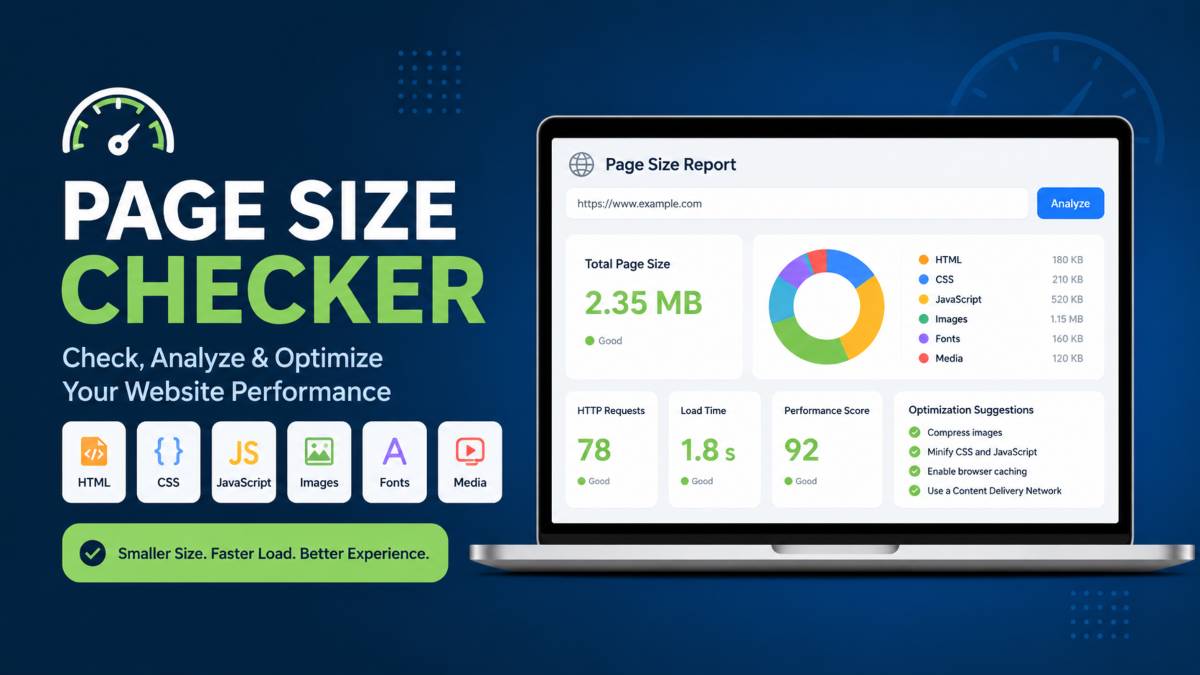
If you searched for “page size checker spellmistake,” you are not looking for a special tool. This phrase usually appears when someone misspells “page size checker” while searching online. Common typing errors can lead users to this keyword, but the search intent remains the same.
Most people searching for this term want a tool that can measure the total size of a webpage and identify elements that may slow down loading speed. A page size checker helps website owners, developers, and SEO professionals understand how much data a page contains, including images, scripts, stylesheets, and other resources.
Understanding webpage size is important because larger pages often take longer to load. Faster websites generally provide a better user experience and can perform better in search results. In this guide, you will learn what a page size checker does, why it matters, and which tools can help you analyze your website’s performance.
What Does “Page Size Checker Spellmistake” Mean?
The term page size checker spellmistake refers to a misspelled version of the keyword page size checker. It is not a separate tool, software, or SEO feature. Instead, it appears when users accidentally type the phrase incorrectly while searching for a tool that measures the size of a webpage.
In most cases, people searching for this keyword are looking for a webpage size checker that can analyze the total weight of a web page. They want to find out how much data a page contains, including images, CSS files, JavaScript files, fonts, and other resources that affect loading speed and performance.
Why People Search for This Term
Typing errors are common when searching online, especially when users are looking for technical SEO tools. A small mistake in spelling can create variations of the same search query. Even though the wording is incorrect, the search intent usually remains unchanged.
Another reason this keyword appears is search engine autocorrect behavior. Modern search engines often recognize misspelled terms and suggest the correct version automatically. As a result, users who type a variation of page size checker are often redirected to relevant results related to webpage size analysis and website performance testing.
Common Misspellings of Page Size Checker
| Misspelled Term | Correct Term |
|---|---|
| page size cheker | page size checker |
| page size chekar | page size checker |
| page size checjer | page size checker |
| page size chekker | page size checker |
| pagesize checker | page size checker |
Regardless of the spelling used, the goal is typically the same: finding a reliable page size checker or webpage size checker to evaluate website performance and loading efficiency.
What Is a Page Size Checker?
A page size checker is a tool that measures the total amount of data required to load a webpage. It helps website owners, developers, and SEO professionals understand how large a page is and identify elements that may affect loading speed. A website page size checker scans a webpage and calculates the combined size of all files that browsers must download before displaying the page to visitors.
By reviewing this information, users can spot performance issues and make improvements that help pages load faster. Since website speed influences user experience and search visibility, monitoring page size is an important part of website maintenance.
Definition of a Page Size Checker
A page size checker is an online performance analysis tool that calculates the total page size of a webpage. It provides a detailed report showing how much space different resources occupy and highlights areas that may need optimization.
Many website owners use a page weight checker to monitor page growth over time and ensure that pages remain fast and efficient for visitors.
What Does a Page Size Checker Measure?
A page size checker measures several resources that contribute to the overall size of a webpage, including:
- HTML size
- CSS files
- JavaScript files
- Images
- Fonts
- Embedded media such as videos, audio files, and external content
Each of these elements adds to the total amount of data that must be loaded when someone visits a page.
Understanding Total Page Weight
The term total page weight refers to the combined size of all resources on a webpage. Larger page weights generally require more time and bandwidth to load, especially on mobile networks.
Below is a simple example of how page weight can be distributed across different resources:
| Resource Type | Example Size |
|---|---|
| HTML | 50 KB |
| CSS | 120 KB |
| JavaScript | 300 KB |
| Images | 1.5 MB |
| Fonts | 100 KB |
| Embedded Media | 500 KB |
| Total Page Size | 2.57 MB |
A website page size checker makes it easy to identify which resources contribute most to page weight, helping you make informed optimization decisions.
Why Page Size Matters for SEO and User Experience
Page size has a direct effect on how quickly a website loads and how visitors interact with it. When a webpage contains large images, heavy scripts, or unnecessary files, browsers need more time to download and display the content. This can create a slower experience for users and may affect overall website performance. Keeping page size under control is an important part of website speed optimization and maintaining a smooth browsing experience.
Impact on Website Loading Speed
The larger a webpage is, the more data a browser must download before the page becomes fully visible. This often results in slower page load speed, especially for users with limited internet connections. Faster pages provide a smoother experience and allow visitors to access information without unnecessary waiting.
Reducing page size can help improve loading times by limiting the amount of data transferred between the server and the visitor’s device. Optimized pages also place less strain on server resources and network bandwidth.
Impact on Search Engine Rankings
Search engines aim to deliver the best possible experience to users. Fast loading websites generally provide a better browsing experience than slow ones. As a result, page speed is one of the factors considered when evaluating overall SEO performance.
A website with smaller, optimized pages is more likely to achieve better performance metrics, making it easier for search engines to crawl and evaluate content efficiently.
Impact on Mobile Users
Mobile visitors often browse using varying network speeds and devices with different performance capabilities. Large webpages can take considerably longer to load on mobile connections, leading to frustration and abandoned visits.
Optimizing page size helps ensure that content loads quickly across smartphones and tablets, creating a more accessible experience for users regardless of their device.
Impact on Bounce Rate and Conversions
Visitors expect websites to load quickly. When pages are slow, users may leave before viewing the content, increasing bounce rates. A faster website encourages users to stay longer, explore additional pages, and complete desired actions such as purchases, sign ups, or contact form submissions.
Benefits of Optimizing Page Size
| Benefit | How It Helps |
|---|---|
| Faster page load speed | Improves user satisfaction and browsing experience |
| Better SEO performance | Supports stronger visibility in search results |
| Improved mobile experience | Helps pages load smoothly on mobile devices |
| Lower bounce rates | Encourages visitors to stay on the website longer |
| Higher conversion potential | Increases the likelihood of user actions and sales |
| Reduced bandwidth usage | Lowers the amount of data transferred to visitors |
| Better website speed optimization | Creates a faster and more efficient website overall |
Managing page size is a simple but valuable step toward improving both user experience and long term website performance.
How to Check the Size of a Webpage
Knowing the size of your webpage can help you identify performance issues and improve loading speed. Whether you manage a personal blog, business website, or ecommerce store, using a website size checker allows you to see how much data visitors must download when accessing your page.
Most page size analysis tools are simple to use and provide detailed reports within seconds. These reports can reveal large files, excessive requests, and other factors that may affect website performance.
Step by Step Guide
Follow these steps to check webpage size using an online tool:
- Copy the URL of the webpage you want to analyze.
- Open a page size checker tool.
- Paste the URL into the search field.
- Start the analysis by clicking the check or analyze button.
- Review the generated report and recommendations.
Running a page size test regularly helps you monitor changes to your website and identify new issues before they affect visitors.
What Information You’ll See
After the scan is complete, the tool will display several important metrics related to webpage performance.
Total Page Size
This shows the combined size of all files required to load the webpage, usually measured in kilobytes or megabytes.
HTTP Requests
The report shows how many requests the browser makes to load resources such as images, scripts, stylesheets, and fonts. A higher number of requests can increase loading time.
Resource Breakdown
Most tools provide a detailed breakdown of file types, helping you see which resources consume the most bandwidth.
Load Time
This metric indicates how long it takes for the webpage to load completely under specific testing conditions.
Optimization Recommendations
Many website size checker tools also provide suggestions for improving performance, such as compressing images, reducing unnecessary scripts, enabling caching, and optimizing code.
By reviewing these metrics, website owners can make informed decisions that improve speed, user experience, and overall website performance.
Best Page Size Checker Tools
Choosing the right page size checker tool can make a big difference when analyzing website performance. While all page size checkers measure webpage weight, some offer additional features such as speed testing, resource analysis, performance scoring, and optimization recommendations. The following website performance tools are widely used by developers, marketers, and SEO professionals to identify issues that affect loading speed and user experience.
GTmetrix
GTmetrix is one of the most popular page speed tools available today. It provides detailed reports on page size, loading speed, Core Web Vitals, and resource usage.
The platform offers visual reports that make it easy to identify large images, unused code, and files that slow down a website. Its waterfall chart helps users understand how each resource affects loading performance.
Key features include:
- Total page size analysis
- Resource breakdown reports
- Core Web Vitals monitoring
- Waterfall performance charts
- Performance recommendations
Google PageSpeed Insights
Google PageSpeed Insights is a free tool that analyzes webpage performance on both desktop and mobile devices. It evaluates loading speed and provides actionable recommendations based on Google’s performance standards.
The tool is especially useful for website owners who want to improve search visibility and user experience. It also reports Core Web Vitals metrics that are important for modern SEO.
Key features include:
- Mobile and desktop testing
- Core Web Vitals analysis
- Performance scoring
- Optimization suggestions
- Real user data insights
Pingdom Website Speed Test
Pingdom is a trusted performance testing platform that helps users evaluate page speed and identify performance bottlenecks.
Its easy to read reports highlight page size, loading time, and the number of requests made by a webpage. This makes it suitable for beginners as well as experienced professionals.
Key features include:
- Page size measurement
- Performance grading
- Load time analysis
- Resource request tracking
- Easy to understand reports
WebPageTest
WebPageTest provides advanced testing capabilities for users who need detailed performance data. It allows testing from different locations, devices, and browsers.
The platform generates in depth reports that reveal how individual resources affect loading speed. It is often used by developers who need detailed technical insights.
Key features include:
- Multi location testing
- Browser specific analysis
- Detailed performance reports
- Waterfall charts
- Advanced testing options
DebugBear
DebugBear is a modern website monitoring and performance testing platform that focuses on page weight and speed optimization.
It provides detailed information about file sizes, resource types, and performance issues that affect loading speed. The tool is particularly useful for tracking website performance over time.
Key features include:
- Page weight analysis
- Resource level insights
- Performance monitoring
- Website speed tracking
- Optimization recommendations
SmallSEOTools
SmallSEOTools offers a simple and free page size checker designed for quick webpage analysis. Users can enter a URL and instantly view the total size of the webpage.
Although it does not provide the advanced reporting available in other tools, it remains useful for quick checks and basic website audits.
Key features include:
- Free webpage size checking
- Fast results
- Simple interface
- Basic performance information
- No technical expertise required
Comparison of Popular Page Size Checker Tools
| Tool | Page Size Analysis | Performance Insights | Free Version |
|---|---|---|---|
| GTmetrix | Yes | Advanced | Yes |
| Google PageSpeed Insights | Yes | Advanced | Yes |
| Pingdom Website Speed Test | Yes | Moderate | Yes |
| WebPageTest | Yes | Advanced | Yes |
| DebugBear | Yes | Advanced | Limited |
| SmallSEOTools | Yes | Basic | Yes |
Each of these page speed tools can help you understand your website’s size and performance. The best choice depends on your needs. Beginners may prefer SmallSEOTools or Pingdom, while developers and SEO professionals often rely on GTmetrix, WebPageTest, DebugBear, and Google PageSpeed Insights for deeper analysis and optimization opportunities.
Common Reasons Your Webpage Size Is Too Large
A large webpage can slow down performance, increase bandwidth usage, and negatively affect the user experience. As websites grow, it becomes easy to add files and features that increase overall page weight without realizing the impact. Understanding the most common causes of oversized webpages can help you make smarter decisions about website optimization and improve website loading time.
Large Images
Images are often the biggest contributor to page weight. High resolution photos, oversized banners, and uncompressed graphics can significantly increase the amount of data that must be downloaded when a page loads.
Using properly sized images and modern formats can help reduce file sizes while maintaining visual quality.
Heavy JavaScript Files
JavaScript adds functionality and interactivity to websites, but large script files can quickly increase page size. Some websites load multiple libraries, plugins, and tracking scripts that are not always necessary.
Reducing unused code and loading only essential scripts can help lower page weight and improve performance.
Unoptimized CSS
CSS files control the appearance of a website, but poorly organized or oversized stylesheets can add unnecessary weight. Over time, websites may accumulate unused styles that continue loading even though they are no longer needed.
Cleaning up unused CSS and combining files where appropriate can help improve efficiency.
Too Many Plugins
Website platforms such as WordPress often rely on plugins for added functionality. While plugins can be useful, installing too many can increase page size by adding extra scripts, stylesheets, fonts, and other resources.
Regularly reviewing and removing unnecessary plugins can reduce page weight and improve website loading time.
Missing Compression
Without compression, files are delivered to visitors in their full size, resulting in larger downloads and slower loading speeds. Technologies such as GZIP and Brotli can significantly reduce file sizes before they are sent to a user’s browser.
Enabling compression is one of the simplest website optimization techniques and can make a noticeable difference in overall performance.
By addressing these common issues, website owners can reduce page weight, improve loading speeds, and create a faster experience for visitors.
How to Reduce Webpage Size
Reducing webpage size is one of the most effective ways to improve website performance. Smaller pages require less data to download, which helps increase page load speed and creates a better experience for visitors. Whether you run a blog, business website, or online store, applying a few proven techniques can make a noticeable difference in overall performance and website speed optimization.
Compress Images
Images often account for the largest portion of a webpage’s size. Uploading high resolution images directly from a camera or design software can significantly increase page weight.
For better image optimization, resize images before uploading them and use compression tools to reduce file size without causing a noticeable drop in quality. Modern image formats such as WebP can also help reduce storage requirements compared to traditional formats.
Practical Tip: If an image is displayed at 800 pixels wide, avoid uploading a version that is 4000 pixels wide. This simple adjustment can save hundreds of kilobytes or even several megabytes.
Enable GZIP or Brotli Compression
GZIP and Brotli compression reduce the size of files before they are transferred from the server to a visitor’s browser. This means HTML, CSS, and JavaScript files require less bandwidth and load faster.
Most modern hosting providers support these compression methods, and enabling them usually requires only a few configuration changes.
Practical Tip: Brotli generally provides better compression rates than GZIP, making it a preferred option when available.
Minify CSS and JavaScript
CSS and JavaScript files often contain spaces, comments, and formatting that help developers read the code but are unnecessary for browsers.
Minification removes these extra characters, creating smaller files that load more quickly. Many website optimization tools can automatically minify files during deployment or through caching plugins.
Practical Tip: Combine multiple CSS or JavaScript files when possible to reduce the number of requests required to load a page.
Use a CDN
A Content Delivery Network, commonly known as a CDN, stores copies of website files on servers located around the world. When visitors access your website, content is delivered from the server closest to their location.
This reduces latency and improves page load speed, especially for international audiences.
Practical Tip: Popular CDN providers include Cloudflare, Bunny CDN, and Amazon CloudFront.
Enable Lazy Loading
Lazy loading prevents images and videos from loading until they are needed. Instead of downloading every media file when a page opens, the browser loads content as users scroll down the page.
This reduces the amount of data loaded initially and improves perceived performance.
Practical Tip: Apply lazy loading to images, video content, and embedded media that appear further down the page.
Use Caching Solutions
Caching stores frequently used files so browsers do not need to download them repeatedly during future visits. This reduces server requests and improves loading speed for returning visitors.
Website platforms often provide caching plugins and built in caching features that can be configured with minimal effort.
Practical Tip: WordPress users can benefit from caching solutions such as WP Rocket, LiteSpeed Cache, W3 Total Cache, and Autoptimize.
By combining image optimization, compression, minification, content delivery networks, lazy loading, and caching, website owners can significantly reduce webpage size and achieve better website speed optimization. These improvements not only enhance user experience but also contribute to faster page load speed across desktop and mobile devices.
Ideal Page Size for SEO
There is no official page size limit set by search engines, but keeping webpages lightweight is generally recommended for better website speed and user experience. Smaller pages load faster, consume less bandwidth, and perform more efficiently across desktop and mobile devices.
The ideal page size depends on the type of website and the content it contains. For example, image heavy ecommerce pages may naturally be larger than simple blog posts. However, website owners should aim to keep page weight as low as possible without sacrificing functionality or visual quality.
The following guidelines can help you evaluate your webpage size:
| Page Size | Recommendation |
|---|---|
| Under 2 MB | Ideal |
| 2 to 3 MB | Acceptable |
| Over 5 MB | Needs Improvement |
Pages that exceed 5 MB often contain oversized images, unnecessary scripts, or other resources that can slow loading times. Regular monitoring can help identify these issues before they affect visitors and search visibility.
Recommended Targets for Modern Websites
For most websites, keeping the ideal page size below 2 MB is a practical goal. This target helps maintain strong website speed while providing a smooth browsing experience across different devices and internet connections.
Modern websites should also focus on reducing unnecessary requests, optimizing images, and minimizing code. These practices support better SEO performance by improving loading times and helping users access content more quickly.
While page size is only one part of website optimization, maintaining a lightweight website creates a strong foundation for faster performance, improved engagement, and better search visibility.
Page Size vs Page Load Time
Many people assume that page size and load time are the same thing, but they measure different aspects of website performance. While they are closely related, understanding the difference can help website owners make better optimization decisions and improve overall user experience.
What Is Page Size?
Page size refers to the total amount of data that a webpage contains. This includes HTML files, CSS stylesheets, JavaScript files, images, fonts, videos, and other resources required to display the page properly.
A page size measurement is usually shown in kilobytes (KB) or megabytes (MB). The larger the page size, the more data a browser must download before the webpage can be fully displayed.
What Is Load Time?
Load time is the amount of time it takes for a webpage to become fully accessible to visitors after they click a link or enter a URL.
Several factors influence load time, including server response speed, internet connection quality, browser performance, and the amount of content on the page. A website may have a moderate page size but still load slowly if other performance issues exist.
Why They Are Connected
Although page size and load time are different metrics, they often influence one another. Larger webpages generally require more data transfers, which can increase page load speed challenges and slow down the browsing experience.
However, page size is not the only factor affecting website performance. Efficient coding, caching, content delivery networks, and server quality also play important roles in determining how quickly a page loads.
Page Size vs Load Time Comparison
| Factor | Page Size | Load Time |
|---|---|---|
| Definition | Total size of webpage resources | Time required for a page to load |
| Unit of Measurement | KB or MB | Seconds or milliseconds |
| Measures | Amount of data on a webpage | Speed of page delivery |
| Influenced By | Images, scripts, CSS, fonts, media files | Server speed, network quality, page size, caching |
| Impact on Users | Higher data usage | Waiting time before content appears |
| Role in Website Performance | Affects efficiency and bandwidth usage | Directly affects user experience |
Understanding both metrics allows website owners to identify performance bottlenecks and make improvements that lead to faster loading pages and better website performance overall.
Final Thoughts
The keyword page size checker spellmistake is simply a misspelled search term used by people looking for a tool that measures the size of a webpage. Although the wording may vary, the goal remains the same: understanding how much data a webpage contains and how it affects website performance.
Page size plays an important role in user experience, website speed, and search visibility. Large pages can slow loading times, increase bandwidth usage, and create frustration for visitors, especially on mobile devices. Keeping page size under control helps create a faster and more efficient website.
Regular monitoring is essential because websites constantly change as new content, images, plugins, and features are added. By checking page size periodically, you can identify issues before they affect performance.
Using trusted page size checker tools such as GTmetrix, Google PageSpeed Insights, WebPageTest, and DebugBear can help you track page weight, uncover performance problems, and maintain a fast, user friendly website.