

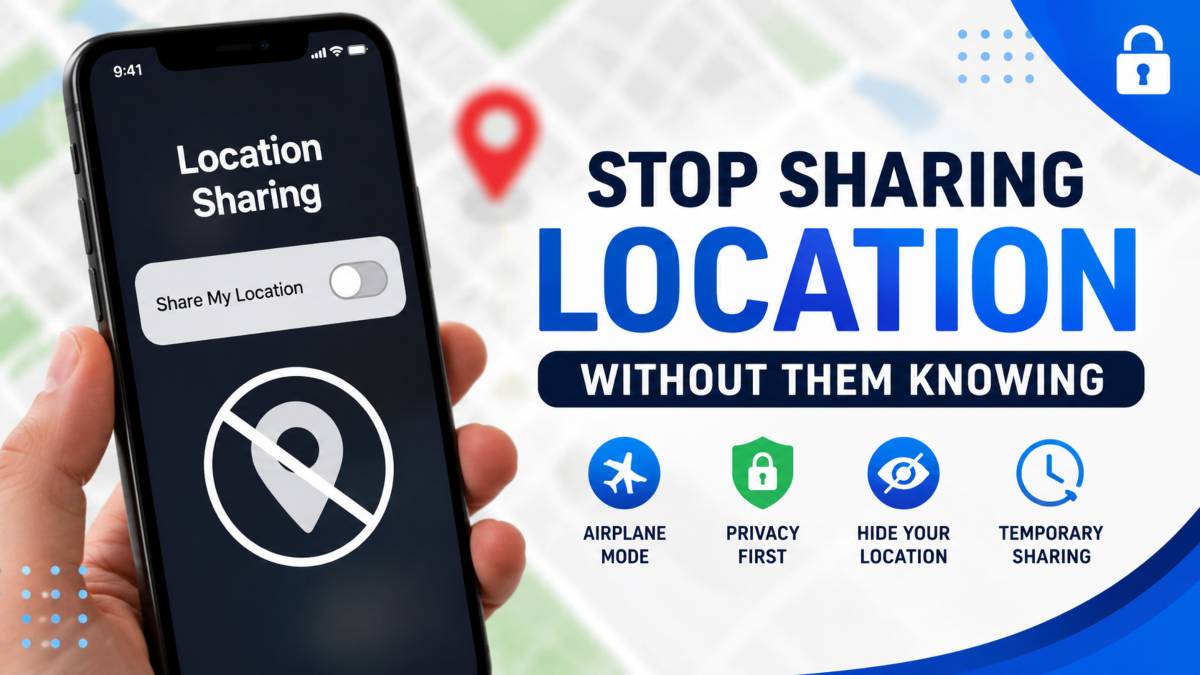
Location sharing can feel helpful until it starts feeling intrusive. Whether you use an iPhone, Android device, Apple Find My, or Google Maps, there are moments when you may want more personal space without triggering awkward questions or alerts. That is why many people search for how to stop sharing location without them knowing while still keeping control over their own privacy.
Modern apps are designed to keep others informed when location sharing changes. In many cases, stopping a shared location directly can send a notification or make your location disappear instantly. Still, there are a few privacy focused methods that can quietly pause updates without creating an obvious alert.
If your goal is to hide your location for a short time, protect personal boundaries, or simply gain more control over your digital footprint, understanding your phone’s settings matters. Both iPhone and Android devices include built in privacy tools that can limit tracking while keeping your account secure.
This guide explains practical ways to manage location sharing privacy across popular apps and devices. You will learn how different settings work, what others can actually see, and which options offer the most discreet way to pause location updates without drawing attention.
How Location Sharing Notifications Actually Work
Most location sharing apps are built around transparency. When you allow someone to track your live location, the app often treats that connection as an active permission between both users. Because of this, many platforms send a stop sharing location notification the moment that access changes.
The reason is simple. Companies want users to know when location access begins, pauses, or ends. It protects privacy and helps prevent secret tracking. That is why understanding how live location alerts work is important before changing any settings.
Which Apps Send Alerts When You Stop Sharing?
Popular apps handle location sharing differently, but most notify the other person in some way when sharing stops manually.
Find My on iPhone is one of the clearest examples. If you tap “Stop Sharing My Location,” the other person usually receives a visible update inside the app. Many users notice Find My notifications almost immediately because the contact disappears from their active sharing list.
Google Maps can also alert users when location sharing ends. Depending on the setup, the other person may see that your location is no longer available or receive a message that sharing has stopped.
WhatsApp live location works differently. Instead of sending a direct warning, the shared session simply ends after the selected time expires or when you stop it manually.
Snapchat uses Snap Map for location tracking. If Ghost Mode is enabled, your Bitmoji disappears from the map without sending a traditional alert, though friends may still notice your location is missing.
Why Apps Notify People About Location Changes
Apps send live location alerts for privacy and safety reasons. Features like family tracking, travel monitoring, and shared trips rely on accurate updates. If someone suddenly disappears from a map without explanation, the app wants users to notice.
These notifications also reduce the risk of hidden tracking. By making location changes visible, platforms create more control and awareness for everyone involved.
Quickest Way to Stop Sharing Location Without Notifications
If you want a fast and simple way to pause location sharing quietly, Airplane Mode is usually the easiest option. Many people use this Airplane Mode location trick as a temporary privacy move because it can freeze location updates without sending a direct alert to the other person.
Instead of showing that you stopped sharing manually, most apps simply display your last known location until your phone reconnects. This creates a temporary ghost mode location effect on apps like Find My, Google Maps, Snapchat, and WhatsApp.
Use Airplane Mode as Temporary Ghost Mode
Here is how to freeze location sharing on iPhone and Android:
- Open your phone’s Control Center or Quick Settings panel
- Turn on Airplane Mode
- Leave it active for as long as needed
- Your live location stops updating automatically
- Most apps continue showing your previous location
If you still need internet access, some phones allow you to switch Wi Fi back on while Airplane Mode stays active. In many cases, your location remains frozen even while browsing online.
This method works best for short breaks rather than all day use. If someone regularly checks your live location, a frozen location for hours may start looking unusual. Still, for quick privacy moments, ghost mode location settings through Airplane Mode remain one of the easiest solutions available.
How to Turn Off Location Services on iPhone
If you want more control over your privacy, turning off Location Services on iPhone is one of the strongest options available. Instead of stopping location sharing inside a single app, this method blocks your iPhone from sending fresh GPS data across the entire device. That means apps like Find My, Google Maps, WhatsApp, and Snapchat can no longer update your live location.
For many users, this feels less obvious than manually removing someone from location sharing lists. It also helps hide my location on iPhone without triggering the same kind of direct sharing alerts found inside certain apps.
Disable Location Services System Wide
Apple makes it simple to disable location access completely.
Follow these steps:
- Open Settings
- Tap Privacy & Security
- Select Location Services
- Turn Location Services off at the top of the screen
Once disabled, your iPhone stops providing live location data to apps and services connected to your account.
You can also disable location access for specific apps instead of shutting everything off completely. This gives more flexibility if you still want maps or weather apps working while limiting tracking elsewhere.
What Happens After Turning Location Off?
After Location Services iPhone settings are disabled, most apps will show your last known location rather than your current one. This means your location may appear frozen for a while before eventually becoming unavailable.
Some apps respond differently:
- Find My may display an older location
- Google Maps can stop refreshing live movement
- Snapchat may remove your live position from Snap Map
- Ride share and delivery apps may stop functioning correctly
This method also affects features tied to navigation, emergency location services, local recommendations, and geotagging.
Because of that, many people only turn Location Services off temporarily when they want extra privacy.
Does iPhone Notify Someone When You Stop Sharing Location?
In most cases, disabling Location Services system wide does not send a direct notification saying you stopped sharing location on iPhone. Instead, the other person usually sees your location stop updating naturally.
That said, some contacts may notice your location becomes unavailable or outdated after a period of time. Apps like Find My are designed to show when a device is no longer actively sharing fresh location data, even without a formal alert message.
How to Stop Sharing Location on Android Without Them Knowing
Android devices give users several ways to control location access quietly. Instead of manually ending a shared session inside an app, many people prefer system level settings that pause updates without creating obvious alerts. If your goal is to disable location sharing Android settings discreetly, there are a few simple methods worth knowing.
Most Android phones rely on Google services for navigation, tracking, and live sharing. Because of this, changing your device location settings can affect Google Maps location sharing, Find My Device, Snapchat, WhatsApp, and other apps connected to GPS data.
Disable Android Location Access
The fastest method is turning off location access directly from your phone settings.
Follow these steps:
- Open Settings
- Tap Location
- Toggle Use Location off
Some Android devices place this option under Security & Location or Privacy depending on the brand.
Once disabled, apps stop receiving fresh GPS updates from your phone. Most people tracking your location will only see your last recorded position until the app eventually stops updating.
This method works well if you want to turn off location without notifying someone directly through the app itself.
Pause Google Maps Location Sharing
Google Maps allows users to share live movement with friends and family, but manually pressing “Stop” inside the app can make the change obvious.
A quieter option is limiting Google Maps access to your location instead.
You can do this by:
- Opening Settings
- Going to Apps
- Selecting Google Maps
- Tapping Permissions
- Changing location access to Deny
This prevents Google Maps from updating your live position while avoiding a direct stop sharing action inside the app.
In many cases, your location simply appears stale or unavailable after some time.
Turn Off Google Location History
Google also stores movement activity through Location History. Disabling this feature adds another layer of privacy.
To turn it off:
- Open your Google Account
- Tap Data & Privacy
- Scroll to Location History
- Disable the feature
This stops Google from saving future movement data connected to your account. While it does not fully disable live sharing by itself, combining it with disabled GPS access gives stronger control over your location visibility on Android devices.
How to Hide Location in Apple Find My
Apple Find My is one of the most widely used location sharing tools on iPhone. It helps friends and family track each other in real time, but it also gives users several privacy controls that many people overlook. If you want to hide location on iPhone without creating an obvious alert, understanding how Find My works is important.
The app offers different ways to control visibility, and each one behaves differently. Some settings quietly pause updates while others immediately notify the person tracking you.
Difference Between Hide My Location and Stop Sharing
Many users assume these options do the same thing, but they work very differently.
When you choose Stop Sharing My Location inside Find My, the connection between you and the other person ends completely. This action is noticeable because your profile disappears from their People list. In most situations, this makes it obvious that location sharing was removed manually.
The Hide My Location option works more subtly. Instead of removing the sharing connection entirely, it pauses live location updates from your device. The other person may simply see your last known location or notice that your position is no longer refreshing.
Because of this, many people use Hide My Location to freeze location on Find My temporarily without triggering an immediate reaction.
Does Find My Send Notifications?
Find My notifications depend on the action you take.
If you manually stop sharing with someone, Apple may make the change visible inside the app almost instantly. The contact can usually tell that sharing has ended because your live location disappears.
However, using broader privacy settings often works differently.
For example:
- Turning off Location Services may pause updates quietly
- Airplane Mode can freeze your last visible location
- Hide My Location may prevent fresh movement updates
- Powering off the device can stop location refreshes temporarily
In these situations, the app typically shows your location as unavailable or outdated rather than sending a direct alert saying you stopped sharing.
Best Privacy Settings for Find My
If your goal is stronger location sharing privacy on iPhone, combining a few settings usually works best.
Useful options include:
- Turning off Location Services temporarily
- Using Hide My Location inside Find My
- Enabling Airplane Mode for short privacy breaks
- Managing which apps can access precise location data
- Limiting Find My access under Privacy settings
These settings allow more control over when and how your location appears while keeping your Apple account active and secure.
Using Time Limited Sharing to Stay Private
Sometimes the smartest privacy move is not hiding your location completely. Instead, you can share location for limited time and let the session end automatically. This feels more natural, creates less suspicion, and gives you better control over when others can view your movement.
Many modern apps now include temporary location sharing features that stop updates after a selected period. Since the timer expires on its own, there is no manual action that suddenly cuts off access. For people looking for quieter privacy settings, this can feel much smoother than pressing a visible “Stop Sharing” button.
Set Temporary Sharing Timers
Temporary timers work best for situations like:
- Sharing your route during travel
- Letting family track your commute
- Meeting friends in crowded places
- Giving short term access during events
Instead of sharing your location all day, you can choose a smaller time window such as 15 minutes, 1 hour, or until arrival.
This creates a more controlled form of temporary location sharing without needing constant updates.
Apps That Allow Auto Ending Location Sharing
Several popular apps already support auto end location sharing features.
Google Maps allows users to choose how long someone can see their live location before access expires automatically.
Waze offers temporary trip sharing that ends once the drive is complete.
Snapchat uses live location timers inside certain sharing features, allowing updates to stop after a selected duration.
These tools give users more privacy while still keeping location sharing useful when needed.
Risks and Things to Know Before Hiding Your Location
Before changing your location settings, it helps to understand what other people may still notice. While tools like Airplane Mode, disabled GPS access, or hidden sharing settings can pause live updates quietly, they do not always make your activity invisible. Many apps are designed to detect interruptions in location tracking, especially when sharing has been active for a long time.
There are also privacy concerns that go beyond simply hiding your position. Location sharing affects safety features, emergency tools, family tracking, and navigation services. That is why it is important to use these settings responsibly and understand the possible side effects first.
Can Someone Tell Your Location Is Frozen?
Yes, sometimes they can.
If your position stays in the exact same place for an unusually long period, another person may realize your live location is no longer updating naturally. Apps like Find My and Google Maps often display timestamps or status indicators that reveal when fresh data has stopped coming through.
For example, someone may notice:
- Your location has not moved for hours
- The app shows an older timestamp
- Your device appears offline
- Movement suddenly stops during travel
This does not always mean they receive a direct alert, but the frozen location can still become noticeable over time.
Apps May Show Location Not Updating
Many platforms include automatic warnings when tracking pauses unexpectedly. Instead of saying you stopped sharing manually, the app may display messages such as:
- “Location not updating”
- “Location unavailable”
- “Last seen here”
- “No recent location found”
These notices vary depending on the app, internet connection, and phone settings.
Legal and Ethical Considerations
Wanting more privacy is completely normal. Many people simply want personal space, fewer interruptions, or stronger control over their digital footprint. Still, location tracking risks become more serious when tools are used to mislead, manipulate, or secretly monitor others.
It is also important to remember that third party tracking apps and hidden surveillance tools may violate privacy laws in some regions. Using built in phone settings is usually the safest and most transparent approach when managing location sharing.
Methods That Usually DO Send Notifications
Not every privacy method works quietly. Some actions immediately make it obvious that location sharing has been turned off. If your goal is to avoid a stop sharing location notification, it helps to know which settings are most visible before making changes.
Many people accidentally reveal the change by using the most direct sharing controls inside apps like Find My or Google Maps. While these options are simple, they are also the easiest for others to notice.
Stopping Sharing Directly in Find My
Apple Find My is very transparent about location sharing changes. When you tap Stop Sharing My Location for a contact, the app usually removes your profile from their active sharing list right away.
This often acts like a Find My stopped sharing alert, even if the app does not send a loud notification message. The other person can quickly notice that your live location disappeared manually.
Ending Google Maps Sharing Manually
Google Maps works in a similar way. If you open the app and manually press Stop under Location Sharing, access ends immediately.
Depending on the setup, the other person may see that your location is no longer available or realize the sharing session ended suddenly.
Removing Someone From Shared Lists
Deleting contacts from shared location lists can also make the change obvious. Once removed, they lose access instantly and may notice missing permissions the next time they open the app.
If privacy is your main goal, quieter methods like temporary location settings or system level controls usually attract less attention than direct removal actions.
Best Method Based on Your Situation
The best privacy method depends on how long you want to pause location sharing and which apps you use most often. Some options work better for short breaks, while others offer stronger long term privacy across your entire device.
If you only need a quick pause, simple tools like Airplane Mode can freeze your location without changing app settings directly. For users who want stronger control, turning off Location Services blocks apps from accessing fresh GPS data completely.
Apple and Android users also have different built in privacy features, so choosing the right method can make location sharing feel less obvious and easier to manage.
Here is a quick comparison of the most practical options.
| Situation | Best Method |
|---|---|
| Short privacy break | Airplane Mode |
| Full privacy | Turn off Location Services |
| iPhone users | Hide My Location |
| Temporary sharing | Timed sharing |
| Google ecosystem | Disable Location History |
Airplane Mode works well when you need a fast and temporary pause. Your last visible location usually remains frozen until the connection returns.
Turning off Location Services gives broader privacy protection because apps can no longer access live GPS information. This is useful for people who want stronger location control across their device.
For iPhone users, Apple’s Hide My Location setting inside Find My offers a quieter way to pause updates without directly removing someone from sharing access.
Timed sharing is one of the cleanest options for casual use because access ends automatically after a selected period. It feels natural and avoids sudden changes that may raise questions.
Meanwhile, Android and Google users often benefit from disabling Google Location History alongside app permissions for more complete privacy control.
Final Thoughts
Location sharing can be useful for safety, travel, and staying connected, but that does not mean you should give up control over your personal privacy. Whether you use an iPhone, Android device, Find My, or Google Maps, there are several ways to manage your location more carefully without creating unnecessary attention.
Simple options like Airplane Mode, Hide My Location, timed sharing, and turning off Location Services can help pause updates quietly while keeping your accounts secure. The best method depends on how much privacy you want and how long you need it.
At the same time, location settings should be used responsibly. Healthy boundaries and honest communication still matter, especially when sharing location with family, friends, or partners.
A smart approach is to review your privacy settings regularly and only share your location when it genuinely makes sense. Small changes inside your phone settings can give you far more control over who sees your movement and when that access should end.