
Most companies no longer run on a handful of software tools. They run on dozens. Sometimes hundreds. Marketing teams use one platform for analytics, another for automation, and three more for collaboration. HR has its own stack. Finance has another. Somewhere in the middle, costs quietly pile up while unused licenses collect dust.
That is exactly why the best SaaS management software has become essential in 2026.
Businesses are dealing with growing SaaS sprawl, scattered subscriptions, surprise renewals, and shadow IT creeping into every department. Employees often sign up for tools without approval, managers lose track of software usage, and finance teams struggle to understand where the budget is actually going. What starts as convenience quickly turns into operational chaos.
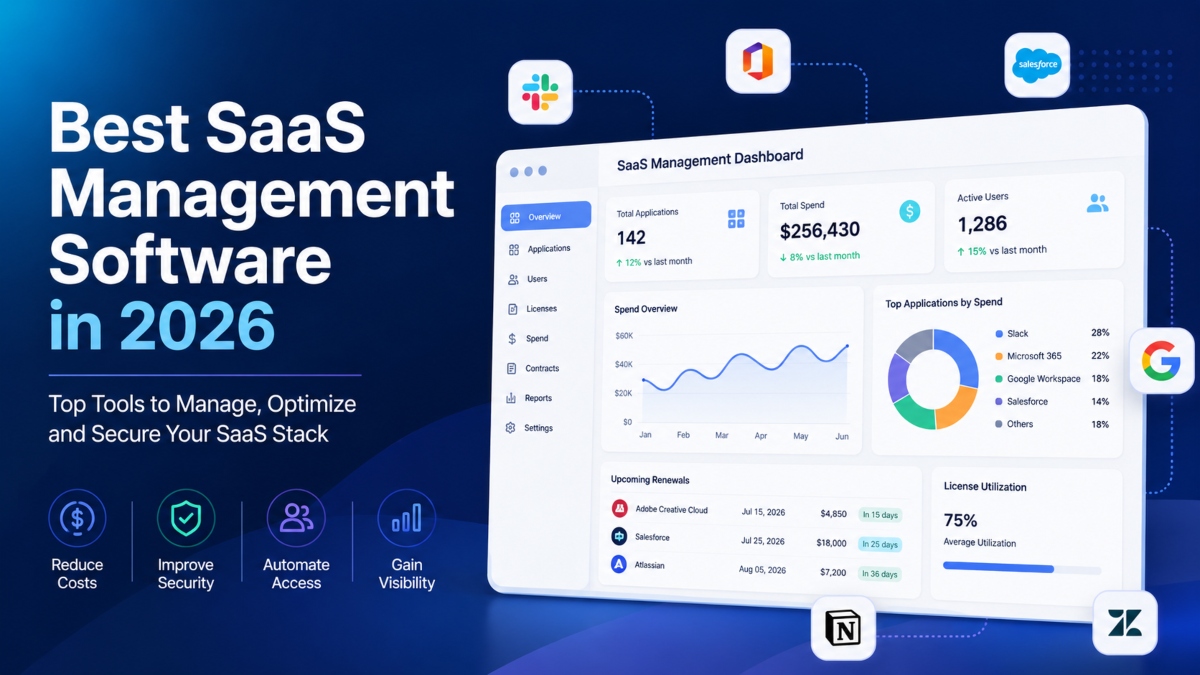
Modern SaaS management platforms bring order back into the picture. They give companies a centralized view of every cloud application, contract, user license, and recurring payment in one place. Instead of juggling spreadsheets and chasing departments for updates, IT and finance teams can monitor software usage, reduce waste, tighten security, and control spending from a single dashboard.
The pressure is even higher now as software costs continue climbing year after year. Businesses want leaner operations without slowing teams down. The right SaaS management tool helps them spot unused apps, automate onboarding, manage renewals, and cut unnecessary spending before it drains the budget.
In 2026, visibility is no longer optional. It is the difference between a controlled SaaS ecosystem and a messy stack that quietly burns money every month.
What Is SaaS Management Software?
SaaS management software helps businesses monitor, organize, and control all the cloud applications used across the company. Instead of manually tracking dozens of subscriptions through spreadsheets, invoices, or disconnected admin panels, teams can manage everything from one centralized system.
Today, the average company relies on tools like Slack, Zoom, Google Workspace, and Jira to keep operations running smoothly. The problem is that software stacks grow fast. One department signs up for a design tool, another adds a marketing platform, and suddenly nobody has a clear picture of what the company is actually paying for.
That is where SaaS management platforms come in. They give IT, finance, operations, and procurement teams a single dashboard to monitor software usage, licenses, contracts, spending, and employee access across the organization. Many SaaSOps tools also automate repetitive tasks that usually eat up hours of manual work.
How SaaS Management Platforms Work
Most SaaS management software connects directly with tools already used inside the business. These platforms scan login systems, finance accounts, browser activity, and employee tools to discover every application connected to the company environment.
Once discovered, the platform tracks spending, license activity, and user engagement. It can flag duplicate subscriptions, unused seats, or apps employees installed without approval. Teams can also automate onboarding and offboarding workflows, making it easier to grant or remove access when employees join or leave the company.
Governance is another major piece of the puzzle. SaaS management platforms help businesses control permissions, monitor vendor contracts, and maintain cleaner security practices across the entire software stack.
Why Businesses Need SaaS Visibility in 2026
Software chaos has become a serious operational problem in 2026. Remote and hybrid work pushed companies to adopt more cloud applications than ever before, but many organizations lost visibility along the way.
Shadow IT continues to grow as employees sign up for tools without notifying IT teams. Subscription waste also drains budgets quietly through inactive accounts and forgotten renewals. At the same time, stricter compliance expectations force businesses to keep tighter control over user access, data handling, and vendor relationships.
Without proper SaaS visibility, companies risk overspending, security gaps, compliance headaches, and disconnected workflows. SaaS management platforms give businesses the clarity they need to keep software ecosystems organized, secure, and financially efficient.
Key Features to Look for in SaaS Management Software
Not all SaaS management platforms solve the same problems. Some focus heavily on spend control, while others lean into automation, governance, or security. The best SaaS management software balances visibility, control, and operational simplicity without overwhelming teams with unnecessary complexity.
Before choosing a platform, businesses should focus on features that directly reduce wasted spending, improve oversight, and simplify daily operations.
Application Discovery and SaaS Inventory
One of the biggest problems companies face is not knowing which tools employees actually use. Teams often subscribe to apps independently, creating scattered software stacks across departments.
Strong SaaS management software should automatically discover applications connected to your organization.
Key capabilities include:
- Automatic app detection through SSO providers and finance systems
- Centralized SaaS inventory dashboard
- Visibility into authorized and unauthorized applications
- Department level software mapping
- Real time app usage monitoring
For example, if employees start using a file sharing tool outside approved systems like Google Workspace or Microsoft Teams, the platform should flag it immediately.
This visibility helps reduce shadow IT before it becomes a security or budgeting issue.
SaaS Spend Tracking and Cost Optimization
Software budgets are climbing fast, especially for growing companies with large remote teams. SaaS spend management software helps businesses understand exactly where money is going.
Important features include:
- Spend tracking by department or vendor
- Subscription monitoring
- Duplicate software detection
- Renewal reminders
- Budget forecasting
- Cost saving recommendations
A practical example would be identifying five inactive premium accounts inside Zoom or overlapping project management subscriptions across teams.
The best SaaS optimization tools turn scattered software expenses into a clean, trackable system that finance teams can actually manage.
License Management and Usage Analytics
Unused licenses quietly drain budgets every month. Many companies continue paying for accounts employees no longer use or even remember.
Good software license tracking features help businesses spot waste quickly.
Look for tools that provide:
- Active versus inactive user monitoring
- License utilization reports
- User engagement analytics
- Automated license reclamation
- Feature level adoption tracking
For example, a platform may show that only 20 percent of employees actively use advanced features inside Jira or Salesforce. That insight helps teams downgrade plans or reduce unnecessary seats.
Usage analytics also help leaders understand which applications genuinely support productivity and which simply collect monthly fees.
Workflow Automation for IT Teams
Manual SaaS management becomes impossible once organizations scale. Workflow automation removes repetitive admin work and speeds up operations.
Modern SaaSOps tools often automate:
- Employee onboarding
- Offboarding processes
- Access approvals
- Role based permissions
- Software requests
- License provisioning
For instance, when a new employee joins the company, the platform can automatically grant access to Slack, email systems, project tools, and cloud storage without IT manually setting everything up.
Automation reduces delays, improves consistency, and cuts down support tickets across IT departments.
Security and Compliance Controls
Every new SaaS app creates another potential security risk. Without proper oversight, businesses lose control over who has access to sensitive data.
Reliable SaaS governance tools should include:
- User access management
- Risk scoring for applications
- Compliance monitoring
- Audit logs
- Permission reviews
- Multi factor authentication support
This becomes especially important for industries dealing with GDPR, SOC 2, HIPAA, or financial compliance requirements.
If an employee leaves the company but still has access to critical systems, the platform should immediately identify and remove those permissions before they become a liability.
Contract and Renewal Management
Many businesses lose money simply because they forget renewal dates or fail to renegotiate contracts on time.
A strong SaaS management platform keeps vendor agreements organized in one place.
Useful features include:
- Renewal calendars
- Contract storage
- Vendor contact tracking
- Spend forecasting
- Negotiation reminders
For example, teams can receive alerts 90 days before a major software renewal, giving procurement teams time to negotiate pricing or review usage data before signing another annual contract.
Third Party Integrations
The value of SaaS management software depends heavily on its ability to connect with existing tools.
Look for platforms with integrations for:
- Identity providers
- HR systems
- Accounting software
- Project management tools
- Communication platforms
- IT service management systems
Popular integrations often include Okta, Workday, Slack, and Jira.
The stronger the integration ecosystem, the easier it becomes to maintain accurate SaaS visibility across the business.
Best SaaS Management Software in 2026
The SaaS management market looks very different in 2026 compared to just a few years ago. Companies are no longer searching for basic subscription tracking. They want deeper visibility, tighter access control, stronger automation, and smarter ways to reduce software waste without slowing teams down.
The best SaaS management software now acts as a control center for IT, finance, procurement, and operations teams. From uncovering shadow IT to managing renewals and onboarding workflows, these platforms help businesses stay organized while software stacks continue expanding.
Below are the top SaaS management platforms worth considering in 2026 based on automation, governance, cost control, usability, and overall business value.
1. Spendflo
Best for: SaaS procurement and cost optimization
Spendflo
Spendflo has become one of the strongest all around platforms for companies trying to control rising SaaS expenses without building a massive procurement team internally. The platform combines spend visibility, vendor management, contract tracking, and negotiation support into one centralized system.
What makes Spendflo stand out is its heavy focus on savings. Businesses can monitor software usage, compare pricing benchmarks, and identify underused tools before contracts renew.
Key features include:
- SaaS spend tracking
- Vendor negotiation support
- Renewal management
- Approval workflows
- Usage analytics
- Procurement automation
Pros
- Excellent cost saving capabilities
- Strong procurement workflows
- Useful benchmarking data
- Clean reporting dashboards
Cons
- Pricing requires custom quotes
- Better suited for mid market and enterprise teams
Ideal for
Companies managing large SaaS budgets across multiple departments.
2. Zylo
Best for: SaaS discovery and governance
Zylo
Zylo focuses heavily on SaaS visibility and governance. The platform helps businesses uncover hidden applications, monitor spending patterns, and reduce software sprawl across the organization.
Its AI powered discovery engine scans systems to identify both approved and unauthorized applications. That makes Zylo especially useful for companies struggling with shadow IT.
Key features include:
- AI driven app discovery
- Risk scoring
- Renewal tracking
- SaaS inventory management
- License optimization
- Vendor analytics
Pros
- Excellent discovery capabilities
- Strong governance tools
- Useful benchmarking insights
- Enterprise friendly visibility
Cons
- Can feel enterprise heavy for smaller teams
- Advanced features may require onboarding support
Ideal for
Large organizations that need tighter governance and software oversight.
3. Zluri
Best for: SaaSOps and access management
Zluri
Zluri positions itself as a complete SaaSOps platform built for modern IT teams. It combines software discovery, access management, workflow automation, and license optimization into a highly flexible system.
One of its biggest strengths is integration coverage. Zluri supports hundreds of applications across collaboration, HR, finance, and productivity categories.
Key features include:
- Access governance
- Onboarding automation
- Offboarding workflows
- License tracking
- SaaS inventory visibility
- Integration management
Pros
- Strong automation tools
- Wide integration ecosystem
- Excellent access management
- Helpful savings insights
Cons
- Some advanced workflows require setup time
- Reporting customization could improve
Ideal for
IT teams managing fast growing software environments.
4. Torii
Best for: Workflow automation and operational control
Torii
Torii stands out for automation. While many platforms focus mainly on spend visibility, Torii pushes deeper into operational workflows and process management.
The platform lets businesses automate onboarding, app approvals, renewal reminders, and employee access changes using custom workflows.
For companies drowning in repetitive SaaS administration tasks, Torii can dramatically reduce manual work.
Key features include:
- Automated workflows
- SaaS discovery
- Usage analytics
- Slack based automation
- Renewal management
- Employee lifecycle automation
Pros
- Powerful automation engine
- Flexible workflow customization
- Strong SaaSOps functionality
- Excellent operational visibility
Cons
- Learning curve for advanced automations
- Better suited for mature IT operations
Ideal for
Organizations focused on automation and operational efficiency.
5. Vendr
Best for: Vendor negotiation and pricing intelligence
Vendr
Vendr approaches SaaS management from a procurement angle. Instead of acting purely as a software inventory tool, it helps businesses secure better pricing and simplify contract negotiations.
The platform uses market benchmarks and purchasing intelligence to help companies avoid overpaying for software subscriptions.
Key features include:
- Pricing benchmarks
- Vendor negotiation support
- Contract analysis
- Renewal assistance
- Procurement workflows
- Spend insights
Pros
- Strong negotiation expertise
- Helpful pricing visibility
- Excellent procurement support
- Saves time during vendor discussions
Cons
- Less focused on operational automation
- Not a traditional full SaaS management platform
Ideal for
Procurement driven businesses focused on contract savings.
6. LeanIX
Best for: Enterprise IT visibility and architecture management
LeanIX
LeanIX brings enterprise level structure to SaaS management. The platform focuses on application portfolio visibility, architecture planning, and software rationalization.
Large organizations with sprawling software ecosystems often struggle to understand application overlap and dependency risks. LeanIX helps visualize those relationships clearly.
Key features include:
- Application portfolio mapping
- Dependency visualization
- Risk analysis
- SaaS inventory management
- Enterprise architecture planning
- Technology lifecycle tracking
Pros
- Excellent enterprise visibility
- Strong architecture tools
- Useful dependency mapping
- Advanced governance capabilities
Cons
- Complex for smaller businesses
- Enterprise pricing structure
Ideal for
Large enterprises with extensive software ecosystems.
7. G2 Track
Best for: Simple SaaS tracking and spend visibility
G2 Track
G2 Track focuses on simplicity and fast deployment. It gives businesses a centralized view of software subscriptions, renewals, and spending without overwhelming teams with enterprise complexity.
For companies that mainly want visibility into software usage and upcoming renewals, G2 Track delivers a straightforward experience.
Key features include:
- SaaS inventory tracking
- Spend monitoring
- Renewal alerts
- Usage visibility
- Contract tracking
- Subscription management
Pros
- Easy to use
- Quick implementation
- Clean dashboards
- Good for smaller teams
Cons
- Limited advanced automation
- Fewer governance capabilities compared to enterprise platforms
Ideal for
Small and mid sized businesses seeking simple SaaS oversight.
8. Productiv
Best for: SaaS adoption and engagement analytics
Productiv
Productiv focuses on one important question many businesses struggle to answer: are employees actually using the software the company pays for?
Instead of simply tracking licenses, Productiv analyzes feature adoption, engagement patterns, and overall software value across teams.
Key features include:
- Feature level usage analytics
- Adoption tracking
- License optimization
- ROI measurement
- SaaS engagement insights
- Vendor utilization analysis
Pros
- Excellent engagement visibility
- Strong analytics capabilities
- Useful adoption insights
- Helps reduce software waste
Cons
- Less focused on procurement workflows
- Advanced reporting may take time to configure
Ideal for
Companies focused on improving software adoption and ROI.
9. Cledara
Best for: SaaS spend control and payment management
Cledara
Cledara combines SaaS management with virtual payment controls. Businesses can issue dedicated virtual cards for subscriptions, monitor spending, and limit unauthorized purchases before they happen.
This creates tighter financial control while simplifying subscription oversight.
Key features include:
- Virtual cards
- Budget controls
- Subscription management
- Spend tracking
- Vendor payment monitoring
- Approval workflows
Pros
- Strong financial oversight
- Easy subscription tracking
- Useful budget controls
- Good fit for finance teams
Cons
- Less focused on advanced IT governance
- Automation features are more limited
Ideal for
Businesses prioritizing spending control and procurement oversight.
10. Lumos
Best for: Access governance and employee permissions
Lumos
Lumos focuses heavily on identity governance and self service software access. Employees can request applications through a centralized portal while IT teams maintain control over approvals and permissions.
The platform helps reduce manual tickets while tightening access governance across the organization.
Key features include:
- Self service app access
- Automated approval workflows
- Role based permissions
- Access governance
- Compliance controls
- Employee lifecycle automation
Pros
- Strong governance controls
- Excellent self service experience
- Reduces IT workload
- Helpful compliance features
Cons
- More specialized than broad SaaS management suites
- Better suited for structured IT teams
Ideal for
Organizations focused on identity management and access governance.
Choosing the right SaaS management software depends on what matters most inside your organization. Some businesses care primarily about reducing costs. Others need stronger governance, automation, or visibility across complex software ecosystems.
The strongest platforms in 2026 combine spend management, operational control, security oversight, and workflow automation into one connected system that helps businesses stay efficient as SaaS environments continue growing.
Spendflo: Best for SaaS Procurement and Cost Savings
Spendflo has positioned itself as one of the strongest platforms for businesses trying to control software spending without slowing down operations. Instead of simply tracking subscriptions, Spendflo focuses heavily on procurement workflows, vendor negotiations, and long term SaaS cost optimization.
Spendflo Official Website
As SaaS stacks continue growing across departments, finance and IT teams often struggle to understand where budgets disappear. Companies end up paying for duplicate tools, inactive licenses, and overpriced contracts that quietly renew every year. Spendflo tackles that problem by giving businesses centralized spend visibility across their entire software ecosystem.
The platform brings procurement, finance, and operations teams into one connected workflow. Businesses can monitor application usage, track contract timelines, review vendor agreements, and manage approval processes from a single dashboard. This makes it easier to spot unnecessary spending before it becomes a larger budgeting issue.
One of Spendflo’s biggest strengths is vendor negotiation support. The platform uses pricing benchmarks and procurement intelligence to help businesses negotiate better SaaS contracts. Instead of entering renewal discussions blindly, teams gain clearer market visibility and stronger leverage during negotiations. According to the company, some organizations reduce software expenses by as much as 30 percent through smarter procurement decisions and improved license management.
Key features include:
- Centralized SaaS procurement workflows
- Real time spend visibility
- Vendor negotiation assistance
- Renewal tracking and alerts
- SaaS cost optimization insights
- Approval workflow automation
- License usage monitoring
- Contract management dashboards
Spendflo works especially well for mid market and enterprise businesses managing large software environments. Companies with growing SaaS sprawl often benefit the most because the platform combines financial oversight with operational control in one place.
For organizations searching for SaaS procurement software that goes beyond simple subscription tracking, Spendflo delivers a strong balance of visibility, savings potential, and procurement efficiency.
Zylo: Best for SaaS Discovery and Governance
Zylo has built a strong reputation as one of the leading platforms for SaaS discovery, governance, and software visibility. For companies struggling to keep track of growing application stacks, Zylo offers a cleaner way to understand exactly which tools employees use across the organization.
Zylo Official Website
One of Zylo’s biggest strengths is its AI driven discovery engine. The platform scans login systems, financial records, browser activity, and application integrations to uncover both approved and unauthorized software. This gives IT and finance teams a much clearer picture of the company’s real SaaS environment.
That visibility matters more than ever in 2026 as shadow IT continues growing across remote and hybrid workplaces. Employees frequently sign up for tools independently using company emails or corporate payment methods. Over time, those disconnected subscriptions create security gaps, duplicate spending, and compliance risks.
Zylo helps businesses detect shadow IT before it spirals into a larger operational problem. The platform automatically flags unknown applications and provides governance controls that help companies maintain tighter oversight across departments.
Another area where Zylo performs well is renewal tracking. Instead of scrambling to manage scattered vendor contracts and expiration dates manually, businesses can centralize renewals inside one dashboard. Teams receive alerts before contracts renew, giving them time to evaluate software usage, renegotiate pricing, or eliminate unnecessary subscriptions.
Key features include:
- AI driven SaaS discovery
- Shadow IT detection
- Centralized SaaS inventory
- Renewal tracking and alerts
- License optimization
- Vendor management visibility
- Risk scoring and governance controls
- Spend monitoring dashboards
Zylo works especially well for enterprise organizations with large software ecosystems and complex governance requirements. Companies handling hundreds of SaaS applications often benefit the most from its strong discovery and oversight capabilities.
For businesses focused on SaaS governance, application visibility, and shadow IT control, Zylo remains one of the strongest SaaS management platforms available in 2026.
Zluri: Best for SaaSOps and Access Management
Zluri has become a popular choice for IT teams that want stronger control over software access, employee lifecycle management, and SaaS operations from one centralized platform.
Zluri Official Website
As companies adopt more cloud applications, managing employee access quickly becomes messy. New hires need accounts across multiple platforms, departing employees often retain access longer than they should, and software permissions become difficult to track across departments. Zluri solves that problem by bringing SaaSOps automation and access governance into a single workflow driven system.
One of the platform’s biggest strengths is onboarding and offboarding automation. Instead of manually creating accounts for every employee across tools like Slack, Google Workspace, and Jira, IT teams can automate the entire process based on employee roles and departments.
The same applies when employees leave the company. Zluri can automatically revoke access, recover unused licenses, and reduce the security risks tied to forgotten accounts.
Access governance is another major reason businesses choose Zluri. The platform gives IT teams better visibility into who has access to what, while helping companies maintain cleaner compliance and permission controls across the organization.
A major advantage is its broad integration ecosystem. Zluri supports more than 800 integrations, allowing businesses to connect identity providers, HR systems, communication tools, finance platforms, and productivity applications without creating disconnected workflows.
Key features include:
- Access governance and permission management
- Automated onboarding workflows
- Employee offboarding automation
- License optimization
- SaaS inventory visibility
- Shadow IT monitoring
- Workflow automation
- 800 plus integrations across business tools
Zluri works particularly well for growing companies that need operational control without building large manual IT processes. Businesses managing hybrid workforces and expanding SaaS stacks often benefit most from its automation capabilities.
For organizations searching for a modern SaaSOps platform with strong access management and employee lifecycle automation, Zluri stands out as one of the most complete solutions available in 2026.
Torii: Best for Workflow Automation
Torii has earned strong attention in 2026 for one reason above all else: automation. While many SaaS management platforms focus mainly on spend visibility and license tracking, Torii leans heavily into operational workflows that reduce manual work for IT and operations teams.
Torii Official Website
As SaaS stacks grow larger, routine admin work quickly becomes overwhelming. Teams waste hours approving software requests, assigning licenses, managing employee access, and tracking onboarding tasks across disconnected systems. Torii simplifies those repetitive processes through highly customizable automation workflows.
One of the platform’s strongest capabilities is Slack automation. Businesses can build automated notifications, approval flows, and task triggers directly inside Slack, helping teams manage software requests without jumping between multiple dashboards.
For example, if an employee requests access to a new application, Torii can automatically send approval prompts to managers, assign licenses after approval, and notify IT teams instantly. This reduces delays while keeping governance policies consistent across departments.
Approval workflows are another major strength. Instead of relying on scattered email chains or manual ticket systems, businesses can centralize software approvals inside structured workflows. This gives finance, procurement, and IT teams tighter control over software adoption and spending.
Torii also performs exceptionally well with onboarding automation. When a new employee joins the company, the platform can automatically provision accounts across tools like Google Workspace, Jira, and communication platforms based on predefined employee roles.
Key features include:
- Slack automation workflows
- Automated software approvals
- Employee onboarding automation
- Offboarding workflows
- SaaS discovery and inventory tracking
- License management
- Renewal monitoring
- Workflow customization tools
Torii works especially well for businesses that want stronger operational efficiency without expanding internal IT workloads. Companies managing fast moving teams and complex software environments often benefit the most from its automation focused approach.
For organizations searching for SaaS management software built around workflow automation and operational control, Torii stands out as one of the most flexible platforms available in 2026.
Vendr: Best for Vendor Negotiation
Vendr has carved out a unique position in the SaaS management market by focusing heavily on procurement support and vendor negotiations rather than traditional software inventory management alone.
Vendr Official Website
For many businesses, the biggest SaaS problem is not discovering applications. It is overpaying for them. Software vendors often use complex pricing structures, multi year contracts, and bundled plans that make negotiations difficult for internal teams. Vendr helps businesses gain leverage during those conversations through pricing benchmarks, contract intelligence, and procurement expertise.
One of the platform’s strongest advantages is its pricing benchmark data. Vendr gives businesses insight into how much other companies pay for similar software, helping procurement and finance teams understand whether current pricing is competitive or inflated. That visibility becomes especially valuable during renewals when vendors push aggressive pricing increases.
Contract intelligence is another area where Vendr stands out. Instead of manually reviewing lengthy SaaS agreements, teams can centralize contract data, monitor renewal timelines, and uncover negotiation opportunities before deadlines approach. This helps businesses avoid rushed renewals that often lead to unnecessary spending.
Vendr also acts as a procurement support layer for organizations managing large software portfolios. Businesses can streamline purchasing decisions, track vendor relationships, and simplify approval processes without relying entirely on manual procurement workflows.
Key features include:
- Pricing benchmark insights
- Vendor negotiation support
- Contract intelligence and analysis
- Renewal management
- Procurement workflow assistance
- SaaS spend visibility
- Vendor relationship tracking
- Cost optimization support
Vendr works particularly well for procurement driven organizations that negotiate large SaaS contracts regularly. Businesses with growing software budgets often benefit from its market intelligence and negotiation expertise.
For companies searching for stronger control over vendor pricing and contract negotiations, Vendr remains one of the most valuable SaaS procurement platforms available in 2026.
LeanIX: Best for Enterprise IT Visibility
LeanIX is built for organizations managing large, complex software ecosystems across multiple departments, business units, and regions. While many SaaS management platforms focus mainly on subscriptions and licenses, LeanIX goes deeper into enterprise architecture, application relationships, and long term IT planning.
LeanIX Official Website
As enterprise software environments expand, companies often lose visibility into how applications connect, overlap, or impact critical operations. Teams may unknowingly maintain duplicate systems, outdated tools, or risky dependencies that create inefficiencies across the business. LeanIX helps solve that problem through structured application portfolio management and enterprise wide visibility.
One of the platform’s strongest capabilities is application portfolio management. Businesses can create a centralized inventory of every software application used across the organization while categorizing tools based on usage, business value, lifecycle stage, and operational importance. This makes it easier for leadership teams to understand which applications deserve investment and which should be retired or consolidated.
LeanIX also excels in enterprise architecture planning. IT leaders can visualize relationships between systems, departments, and cloud applications through interactive architecture maps. These insights help organizations make smarter modernization decisions while reducing unnecessary complexity across the tech stack.
Another major strength is SaaS dependency mapping. The platform helps businesses identify how applications interact with each other and where operational risks exist. For example, if one core system fails or changes, teams can quickly see which connected tools and workflows may be affected.
Key features include:
- Application portfolio management
- Enterprise architecture visualization
- SaaS dependency mapping
- Technology lifecycle tracking
- Risk and impact analysis
- Cloud and SaaS visibility
- Governance reporting
- Software rationalization insights
LeanIX works particularly well for large enterprises with extensive software infrastructures and layered IT operations. Organizations managing hundreds of interconnected applications often benefit the most from its strategic visibility tools.
For businesses focused on enterprise architecture, software governance, and long term IT visibility, LeanIX stands out as one of the most advanced SaaS management platforms available in 2026.
G2 Track: Best for Simple SaaS Tracking
G2 Track is a strong option for businesses that want clear SaaS visibility without the complexity often found in enterprise heavy platforms. Instead of overwhelming teams with advanced governance layers and complicated workflows, G2 Track focuses on the essentials: spend monitoring, usage visibility, and renewal management.
G2 Track Official Website
Many small and mid sized companies struggle with scattered subscriptions, unclear software ownership, and surprise renewals that quietly drain budgets. G2 Track simplifies that process by giving businesses a centralized dashboard where they can see all software subscriptions, vendor costs, and license activity in one place.
One of the platform’s biggest strengths is spend monitoring. Teams can track SaaS expenses across departments, identify duplicate subscriptions, and understand where software budgets are increasing over time. This visibility helps businesses make smarter purchasing decisions before costs spiral out of control.
Usage visibility is another useful feature. G2 Track helps organizations understand whether employees actively use the software they pay for. If certain applications sit unused or underused, businesses can reduce licenses or eliminate subscriptions entirely.
The platform also handles renewal reminders effectively. Instead of missing important contract dates or rushing through last minute renewals, teams receive alerts before subscriptions expire. That gives finance and procurement teams enough time to evaluate software value, negotiate pricing, or cancel tools that no longer serve the business.
Key features include:
- SaaS spend monitoring
- Usage visibility and tracking
- Renewal reminders
- Centralized SaaS inventory
- Subscription management
- Contract visibility
- Vendor tracking
- Basic license management
G2 Track works especially well for businesses that need fast SaaS visibility without building complicated operational workflows. Smaller IT teams and growing companies often appreciate its cleaner learning curve and straightforward interface.
For organizations looking for a lightweight SaaS management platform focused on visibility and cost control, G2 Track remains one of the simplest and most accessible options in 2026.
Productiv: Best for SaaS Adoption Analytics
Productiv focuses on a question many businesses struggle to answer: are employees actually getting value from the software the company pays for? While many SaaS management platforms stop at license tracking and spend visibility, Productiv goes deeper into user behavior, engagement patterns, and software adoption analytics.
Productiv Official Website
As SaaS budgets continue rising, companies can no longer afford to pay for tools that employees barely use. A platform may look important on paper, but without real engagement data, businesses often renew expensive subscriptions without understanding whether those tools improve productivity or simply sit idle.
Productiv helps solve that problem through detailed engagement analytics. The platform tracks how employees interact with applications across teams, giving IT and finance leaders a clearer picture of software adoption and business value.
One of its strongest capabilities is feature level usage analysis. Instead of only showing whether employees logged into an application, Productiv reveals which features people actually use. For example, a company may discover that most employees only use basic collaboration features inside Slack or only touch a small percentage of advanced tools within Salesforce. That insight helps businesses downgrade plans, remove unnecessary add ons, or consolidate overlapping tools.
The platform also delivers stronger ROI tracking by connecting software engagement with operational value. Businesses can identify which tools drive productivity and which subscriptions quietly consume budget without delivering meaningful returns.
Key features include:
- Engagement analytics
- Feature level usage tracking
- SaaS ROI analysis
- License optimization
- Adoption reporting
- Application usage insights
- Vendor performance visibility
- Spend efficiency monitoring
Productiv works particularly well for organizations trying to reduce software waste while improving employee adoption across large SaaS environments. Companies with expensive enterprise subscriptions often benefit the most from its deep analytics capabilities.
For businesses focused on software ROI, employee engagement, and smarter SaaS optimization, Productiv remains one of the most valuable analytics driven platforms available in 2026.
Cledara: Best for SaaS Spend Control
Cledara takes a finance first approach to SaaS management by giving businesses tighter control over software spending, purchasing, and subscription oversight. Instead of focusing mainly on discovery or automation, Cledara concentrates on helping companies prevent unnecessary spending before it happens.
Cledara Official Website
One of the platform’s standout features is its use of virtual cards for SaaS purchases. Businesses can create dedicated virtual payment cards for individual applications, vendors, teams, or departments. This gives finance teams cleaner visibility into where money goes while reducing the chaos that often comes with shared company credit cards.
For example, a marketing team could receive its own virtual card for design and analytics tools, while engineering manages separate spending limits for development platforms. If a subscription is no longer needed, businesses can freeze or cancel the card instantly without disrupting unrelated payments.
Budget controls are another major strength. Cledara allows companies to set spending limits, approval policies, and purchasing rules before new software gets added to the stack. This helps reduce unauthorized subscriptions and keeps software expenses aligned with company budgets.
The platform also simplifies centralized billing by bringing SaaS payments, invoices, and subscription tracking into one dashboard. Instead of chasing invoices across multiple departments or payment systems, finance teams can monitor all software expenses from a single location.
Key features include:
- Virtual cards for SaaS purchases
- Budget controls and spending limits
- Centralized billing dashboards
- Subscription tracking
- Vendor payment monitoring
- Approval workflows
- SaaS spend visibility
- Financial reporting tools
Cledara works especially well for startups, finance teams, and growing businesses that want stronger purchasing discipline without creating complicated procurement processes. Companies managing large numbers of recurring subscriptions often benefit from its cleaner financial oversight.
For organizations focused on SaaS spend control, budgeting, and centralized payment management, Cledara remains one of the most practical solutions available in 2026.
Lumos: Best for Access Governance
Lumos has become a strong choice for businesses that want tighter control over employee permissions, software access, and compliance workflows across growing SaaS environments. Rather than focusing mainly on spend management, Lumos centers its platform around identity governance and operational security.
Lumos Official Website
As companies adopt more cloud applications, managing user access becomes increasingly difficult. Employees request new tools constantly, permissions pile up across departments, and IT teams struggle to track who can access sensitive systems. Lumos simplifies that process through centralized access governance and automation driven workflows.
One of its standout capabilities is self service access management. Employees can request applications through a centralized portal instead of relying on scattered emails or manual IT tickets. Managers and administrators can then approve or reject requests using structured workflows that keep access policies organized and consistent.
Compliance workflows are another major strength. Businesses dealing with strict regulatory requirements often need cleaner audit trails, permission reviews, and role based access controls. Lumos helps organizations maintain stronger oversight while reducing the manual work tied to compliance management.
The platform also performs well with entitlement automation. Instead of manually assigning and removing permissions every time an employee changes roles or leaves the company, Lumos automates access adjustments based on predefined rules and employee status changes. This reduces security gaps while helping IT teams avoid time consuming administrative tasks.
For example, when a new employee joins the organization, Lumos can automatically grant access to approved tools like Slack, Google Workspace, and internal systems based on department and job role. When employees leave, permissions can be revoked instantly to reduce security risks.
Key features include:
- Self service access requests
- Compliance workflows
- Entitlement automation
- Role based permissions
- Access governance controls
- Automated onboarding and offboarding
- Audit logs and reporting
- SaaS permission visibility
Lumos works particularly well for companies focused on security, compliance, and operational efficiency across large SaaS environments. Organizations handling sensitive data or complex user permissions often benefit the most from its governance focused approach.
For businesses searching for a modern SaaS access governance platform with strong automation and compliance controls, Lumos remains one of the leading solutions available in 2026.
Formatting Template for All SaaS Management Software Reviews
To keep the article clean, scannable, and SEO friendly, every platform review should follow the exact same structure. This improves readability, creates stronger comparison flow, and helps readers quickly evaluate tools without hunting for information.
Use the following review format consistently across all software sections.
Tool Name
Best for
Briefly explain the platform’s primary strength and ideal use case.
Example:
Best for SaaS procurement and cost optimization.
Overview
Write a short introduction explaining what the platform does, why businesses use it, and what makes it stand out in the SaaS management market.
Keep this section practical and conversational.
Recommended length:
120 to 180 words
Key Features
Use bullet points for easier scanning.
Example format:
- SaaS spend tracking
- License optimization
- Workflow automation
- Vendor management
- Renewal alerts
- Access governance
Keep feature explanations concise and practical.
Pros
Use short bullet points.
Example:
- Easy to use dashboard
- Strong automation workflows
- Helpful reporting tools
- Excellent SaaS visibility
Limit to 4 or 5 points.
Cons
Keep this balanced and realistic.
Example:
- Advanced setup may take time
- Enterprise pricing may not suit startups
- Some integrations require configuration
Limit to 2 or 3 points.
Pricing
Mention whether pricing is:
- Custom pricing
- Quote based
- Tiered plans
- Free trial available
- Enterprise pricing
If exact pricing is unavailable, avoid guessing.
Example:
Custom pricing based on company size and SaaS environment.
Ideal Company Size
Clearly define who benefits most from the platform.
Examples:
- Startups and small businesses
- Mid market companies
- Enterprise organizations
- Procurement driven teams
- IT heavy environments
Recommended Formatting Tips
- Keep paragraphs short
- Use bullet points heavily
- Avoid oversized blocks of text
- Maintain identical heading order for every review
- Use bold formatting sparingly for scannability
- Mention recognizable tools naturally where relevant
- Keep tone practical instead of overly technical
SEO Benefits of Consistent Formatting
Using the same structure across all reviews helps:
- Improve user engagement
- Increase time on page
- Make comparison easier
- Improve mobile readability
- Strengthen featured snippet potential
- Support commercial search intent
Consistent formatting also gives the article a cleaner editorial feel, which builds reader trust during software comparisons.
SaaS Management Software Comparison Table
Choosing the right SaaS management platform becomes much easier when you compare core strengths side by side. Some tools focus heavily on automation and governance, while others prioritize spend control, procurement, or SaaS visibility.
The table below gives a quick overview of the best SaaS management software in 2026 based on features, pricing structure, and ideal business fit.
| Platform | Best For | Key Features | Pricing Model | Ideal Company Size |
|---|---|---|---|---|
| Spendflo | SaaS procurement and cost savings | Spend tracking, vendor negotiation, procurement workflows | Custom pricing | Mid market and enterprise |
| Zylo | SaaS discovery and governance | AI discovery, shadow IT detection, renewal tracking | Custom pricing | Large enterprises |
| Zluri | SaaSOps and access control | Onboarding automation, access governance, 800 plus integrations | Tiered pricing | Growing businesses and enterprises |
| Torii | Workflow automation | Slack automation, approval workflows, SaaS visibility | Custom pricing | Mid market and IT driven teams |
| Vendr | Vendor negotiation | Pricing benchmarks, procurement support, contract intelligence | Tiered annual plans | Procurement focused organizations |
| LeanIX | Enterprise IT visibility | Application portfolio management, SaaS dependency mapping | Custom pricing | Large enterprises |
| G2 Track | Simple SaaS tracking | Spend monitoring, renewal reminders, usage visibility | Quote based | Small and mid sized businesses |
| Productiv | SaaS adoption analytics | Engagement analytics, feature level usage, ROI tracking | Custom pricing | Enterprise organizations |
| Cledara | SaaS spend control | Virtual cards, budget controls, centralized billing | Subscription pricing | Startups and finance teams |
| Lumos | Access governance | Self service access, compliance workflows, entitlement automation | Custom pricing | Security focused enterprises |
This comparison gives businesses a clearer starting point before narrowing down platforms based on budget, team size, security requirements, and operational priorities.
How to Choose the Right SaaS Management Platform
The right SaaS management platform depends less on flashy features and more on how your business actually operates. A startup managing ten subscriptions has very different needs compared to an enterprise handling hundreds of applications across multiple departments.
Instead of chasing the platform with the longest feature list, focus on the problems you need to solve first. Some businesses need tighter spend control. Others care more about automation, governance, or enterprise SaaS visibility.
Best Options for Small Businesses
Smaller companies usually need simplicity, affordability, and quick setup. Complex enterprise workflows often create more confusion than value for lean teams.
The best SaaS management for startups typically focuses on:
- Spend monitoring
- Subscription tracking
- Renewal reminders
- Basic license visibility
- Simple onboarding workflows
Platforms like G2 Track and Cledara work well because they offer cleaner interfaces and easier deployment without requiring large IT teams.
If your company is growing quickly, prioritize tools that can scale gradually as software usage expands.
Best Platforms for Mid Market Teams
Mid market businesses often hit the point where SaaS sprawl becomes difficult to manage manually. Different departments start purchasing tools independently, renewals pile up, and finance teams lose visibility into software spending.
At this stage, businesses benefit from platforms that combine automation, governance, and optimization.
Strong options include:
- Spendflo for spend control and procurement workflows
- Zluri for onboarding automation and access governance
- Torii for workflow automation and operational efficiency
Mid market teams should focus on platforms with strong integrations, license tracking, and automation capabilities that reduce manual work across IT and operations.
Best Enterprise SaaS Management Tools
Large organizations need far deeper control over software ecosystems. Enterprise environments usually involve hundreds of applications, layered compliance requirements, and multiple approval structures.
The best SaaS tools for enterprises typically include:
- Advanced governance controls
- Enterprise architecture visibility
- SaaS dependency mapping
- Risk analysis
- Access management automation
- Detailed reporting
Platforms like LeanIX, Zylo, and Lumos perform especially well for enterprise SaaS visibility and operational oversight.
Enterprises should prioritize scalability, governance, and compliance readiness over lightweight simplicity.
Best Choice for Procurement Driven Companies
Some businesses care less about software discovery and more about reducing costs during vendor negotiations. In those cases, procurement focused platforms deliver the strongest value.
Vendr and Spendflo stand out for pricing benchmarks, contract intelligence, and negotiation support.
These platforms help companies:
- Track renewal timelines
- Compare vendor pricing
- Improve procurement workflows
- Reduce overspending
- Negotiate better SaaS contracts
If controlling software budgets is your primary goal, procurement focused SaaS management tools often deliver faster financial impact than broader operational platforms.
Benefits of Using SaaS Management Software
As businesses rely on more cloud applications every year, managing software manually becomes expensive, messy, and difficult to scale. SaaS management software helps companies regain control by improving visibility, reducing waste, and streamlining day to day operations across the entire software ecosystem.
From finance and procurement to IT and security teams, nearly every department benefits from having centralized SaaS visibility.
Reduce Wasted SaaS Spend
One of the biggest advantages of SaaS management software is cost reduction. Many businesses pay for applications employees rarely use, duplicate subscriptions across teams, or inactive accounts that continue renewing quietly in the background.
A strong SaaS analytics platform helps businesses identify:
- Unused licenses
- Duplicate software tools
- Underutilized subscriptions
- Overspending across departments
- Missed contract optimization opportunities
For example, a company may discover multiple teams paying separately for similar project management tools or premium accounts that employees stopped using months ago. Instead of relying on spreadsheets and manual audits, finance teams can monitor software expenses in real time and make smarter purchasing decisions.
Over time, those savings can become significant, especially for companies managing large SaaS environments.
Improve Security and Compliance
Every new SaaS application introduces another potential security risk. Without proper oversight, employees may install unauthorized software, share sensitive data through unapproved platforms, or retain access to systems long after leaving the company.
SaaS management software improves shadow IT management by uncovering applications operating outside approved IT processes. Businesses gain better control over user permissions, software access, and compliance requirements across the organization.
Many platforms also support:
- Access governance
- Permission reviews
- Audit logs
- Compliance reporting
- Automated deprovisioning
This becomes especially important for companies handling customer data, financial information, or regulated industries where compliance standards remain strict.
Simplify Employee Onboarding and Offboarding
Managing employee access manually wastes time and increases the risk of mistakes. New hires often wait for software access, while departing employees may keep permissions longer than they should.
SaaSOps automation simplifies both processes.
With the right platform, businesses can automatically:
- Assign software based on employee roles
- Provision accounts instantly
- Remove access during offboarding
- Recover unused licenses
- Standardize onboarding workflows
For example, when a new employee joins the marketing team, the platform can automatically grant access to Slack, Google Workspace, analytics platforms, and collaboration tools without manual IT intervention.
This improves efficiency while reducing security gaps tied to forgotten accounts.
Gain Better Visibility Across Your Tech Stack
Many organizations simply do not know how many SaaS applications employees actively use. Over time, software ecosystems grow fragmented, making it difficult to track spending, ownership, and operational dependencies.
SaaS management platforms solve this problem through centralized SaaS visibility.
Businesses can monitor:
- Active applications
- Vendor relationships
- License usage
- Department level software adoption
- Contract timelines
- Software engagement trends
That visibility helps leadership teams make cleaner operational decisions while improving coordination between IT, finance, procurement, and security departments.
In 2026, businesses no longer compete with small software stacks. They operate inside increasingly complex cloud ecosystems. SaaS management software helps keep those ecosystems organized, secure, and financially sustainable.
Common Challenges Businesses Face Without SaaS Management
As software stacks grow larger, companies without a proper SaaS management system often lose control faster than they realize. What starts as a few disconnected subscriptions can quickly turn into operational confusion, rising costs, and security blind spots across the organization.
Without centralized SaaS visibility, businesses spend more time reacting to problems instead of preventing them.
Shadow IT Risks
Shadow IT happens when employees sign up for software without approval from IT or security teams. It usually starts with good intentions. A marketing team downloads a design tool. Sales adopts a new CRM extension. Operations adds another productivity app to speed up collaboration.
The problem is that nobody tracks these tools centrally.
Over time, businesses lose visibility into where company data lives, who has access to it, and whether those applications meet security standards. Unapproved tools can create compliance problems, increase security exposure, and make audits far more difficult.
Without SaaS management software, shadow IT often grows quietly in the background until it becomes a serious operational issue.
Duplicate Software Purchases
Many businesses unknowingly pay for multiple tools that solve the exact same problem. One department may use one project management platform while another team subscribes to something nearly identical.
For example:
- HR uses one communication tool
- Marketing buys another
- Customer support adds a third
Without centralized oversight, software duplication becomes common. Companies end up paying for overlapping subscriptions, unused licenses, and disconnected workflows that waste both money and productivity.
A SaaS management platform helps businesses identify redundant applications before software costs spiral further.
Missed Renewals and Budget Leakage
Software renewals are easy to forget when contracts live across spreadsheets, emails, and separate vendor portals.
Businesses without proper tracking often face:
- Surprise renewals
- Automatic contract extensions
- Missed cancellation windows
- Unused subscriptions renewing yearly
That budget leakage adds up quickly, especially for companies managing dozens or hundreds of SaaS applications.
SaaS management platforms centralize renewal tracking and send alerts before important deadlines arrive, giving businesses time to review usage and negotiate pricing properly.
Poor User Access Control
User access becomes difficult to manage when employees constantly join, switch roles, or leave the company.
Without centralized access governance:
- Former employees may retain software access
- Permissions become inconsistent
- Sensitive systems stay exposed
- IT teams waste hours managing accounts manually
For example, an employee may leave the company but still maintain access to shared drives, collaboration platforms, or customer databases weeks later.
SaaS management software helps businesses automate onboarding and offboarding while keeping user permissions cleaner, safer, and easier to monitor across the entire software stack.
Final Verdict
The best SaaS management software in 2026 ultimately depends on how your business handles software operations, budgeting, security, and growth. Some companies need stronger procurement workflows, while others care more about automation, governance, or enterprise visibility.
For most organizations, Spendflo stands out as the best overall option thanks to its balance of spend visibility, procurement support, vendor negotiation, and SaaS cost optimization. It works especially well for businesses trying to control rising software expenses without creating operational friction.
Large organizations managing complex software ecosystems may lean toward LeanIX or Zylo because of their stronger enterprise SaaS visibility, governance controls, and application mapping capabilities.
If workflow automation is the priority, Torii and Zluri offer some of the strongest onboarding, approval, and SaaSOps automation features available today.
Businesses focused heavily on reducing software costs and improving vendor negotiations should seriously consider Vendr and Cledara for procurement visibility and tighter financial control.
Meanwhile, startups and smaller teams that want simpler SaaS oversight without enterprise complexity may find G2 Track easier to manage and faster to deploy.
The good news is that modern SaaS management platforms now cover far more than subscription tracking alone. They help businesses reduce waste, tighten security, automate workflows, and gain cleaner control over increasingly crowded software stacks.
Before choosing a platform, take time to audit your SaaS stack, compare pricing models, and book demos with vendors that match your operational priorities. The right platform can save your business thousands while making software management far less chaotic.