

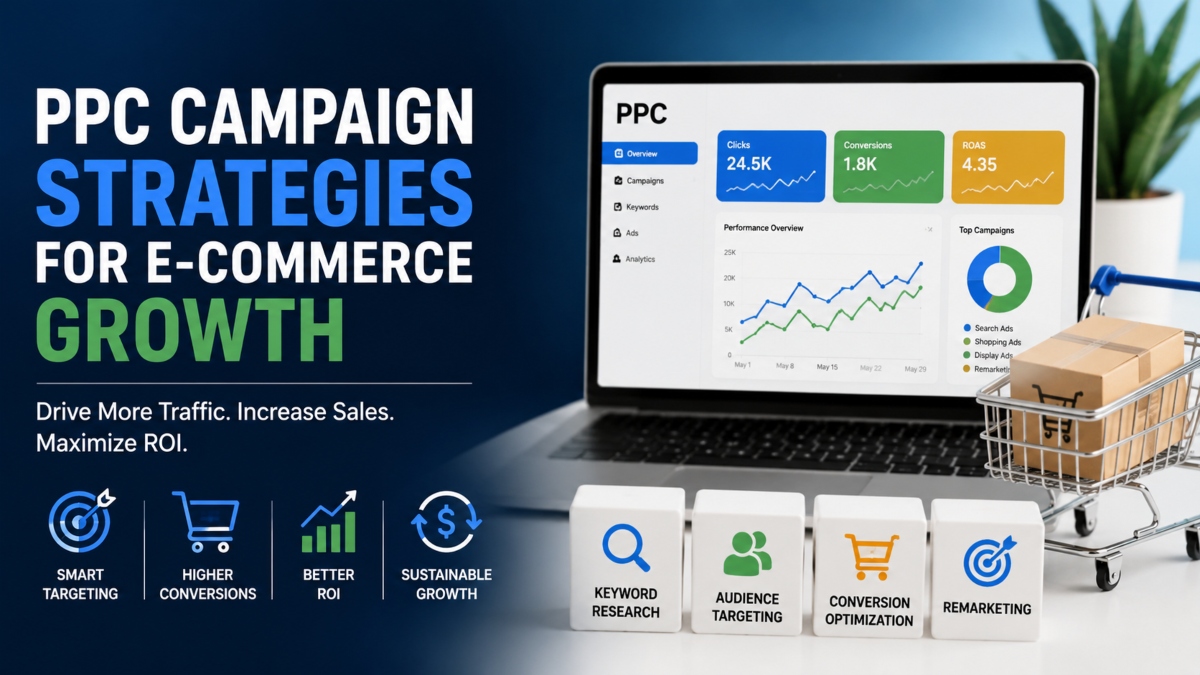
Running an online store is more expensive and more competitive than ever. Brands are fighting for visibility across Google, social media platforms, and shopping feeds while customer attention keeps getting shorter. That is exactly why the best PPC campaign strategies for e commerce growth matter so much right now. A well planned campaign can place your products in front of shoppers who are already searching for what you sell, giving your business faster traffic, stronger conversions, and measurable revenue growth.
Many store owners waste budget chasing clicks that never turn into sales. Smart e commerce PPC strategies focus on attracting buyers with real purchase intent instead of random visitors. The goal is not just traffic. The goal is profitable traffic that leads to repeat customers and higher return on ad spend.
At the same time, PPC advertising for online stores has become more demanding. Rising ad costs, crowded search results, and changing consumer behavior mean brands can no longer rely on basic campaigns and generic ads. Winning today requires sharper targeting, cleaner product feeds, stronger landing pages, and constant testing.
This guide breaks down practical PPC strategies that help e commerce businesses reduce wasted spend, improve conversion rates, and scale sales with more control and consistency.
Why PPC Matters for E Commerce Businesses
For many online brands, visibility is the difference between growth and getting ignored. Thousands of stores compete for the same customers every day, which makes traffic harder to win through organic reach alone. This is where PPC for online stores becomes valuable because it places products directly in front of shoppers who are already searching with the intention to buy.
How PPC Drives Fast Traffic and Sales
One of the biggest advantages of paid search marketing is speed. Unlike organic strategies that can take months to gain traction, PPC campaigns can start generating traffic almost immediately after launch. When someone searches for a product, your ad can appear at the top of the results page within hours, putting your store in front of high intent buyers at the exact moment they are ready to act.
Buyer intent plays a major role in campaign performance. Searches like “buy wireless headphones online” or “best running shoes for women” usually come from people who are already close to making a purchase. That level of intent often leads to stronger conversion rates compared to general traffic sources.
PPC also gives businesses more control over audience targeting, budget allocation, and product visibility. Instead of waiting for customers to discover your store naturally, you actively position your products where demand already exists.
Organic SEO vs PPC for E Commerce Growth
SEO and PPC are often treated like competing strategies, but the strongest e commerce brands use both together. SEO supports long term online store growth by helping websites rank organically for valuable keywords over time. It builds authority, trust, and consistent traffic without paying for every click.
PPC, on the other hand, delivers immediate exposure and faster testing opportunities. You can quickly identify winning keywords, products, and messaging before applying those insights to organic content strategies.
When combined properly, SEO and paid search marketing strengthen each other. PPC drives fast results while SEO builds sustainable visibility, creating a balanced growth strategy that supports both short term revenue and long term brand expansion.
Focus on High Intent Keywords
Strong PPC campaigns begin with the right search intent. Many online stores lose money because they target broad keywords that attract casual browsers instead of ready to buy shoppers. The goal of smart PPC keyword targeting is to connect your ads with people who already know what they want and are closer to making a purchase.
High intent keywords usually produce better conversion rates because they reflect buying behavior rather than curiosity. This makes them one of the most important parts of successful e commerce search campaigns.
Types of Buyer Intent Keywords That Convert
Some keywords signal much stronger purchase intent than others. Terms like “buy,” “best,” and “discount” often come from shoppers comparing products or preparing to place an order. Product specific searches also perform well because they show clear interest in a particular item or category.
For example, a search like “buy leather office chair online” carries far more commercial intent than a broad phrase like “office furniture ideas.” The first search comes from someone actively shopping, while the second may only reflect casual research.
Longer search phrases can also produce stronger results because they match detailed customer needs. Searches such as “best waterproof hiking boots for winter” or “discount gaming laptop under 1000” often attract users with a clear buying goal.
Using high intent keywords helps improve click quality, conversion rates, and overall campaign efficiency.
Structuring Campaigns by Product Category
Well organized campaign structures make it easier to control budgets, optimize bids, and improve ad relevance. Many e commerce brands separate campaigns into branded, non branded, and competitor keyword groups.
Branded campaigns target searches that include your company or product name. These keywords often convert well because users already recognize the brand.
Non branded campaigns focus on category and product related searches that attract new customers. This is usually where businesses scale customer acquisition.
Competitor campaigns target searches related to rival brands and products. These campaigns can generate valuable traffic when supported by strong offers and persuasive ad copy.
Clear campaign segmentation gives advertisers better visibility into what drives sales and what wastes budget.
Negative Keywords to Reduce Wasted Spend
Negative keywords help filter out irrelevant traffic that drains advertising budgets. If your ads appear for searches unrelated to your products, clicks increase while conversions stay low.
For example, a premium fashion brand may want to exclude terms like “cheap” or “free” to avoid low quality traffic. This simple adjustment can improve click quality and strengthen return on ad spend.
Regularly reviewing search term reports helps identify poor performing queries and refine targeting over time. Strong e commerce search campaigns are not built on traffic volume alone. They succeed because the traffic is relevant, targeted, and ready to convert.
Optimize Product Feeds for Shopping Campaigns
For e commerce brands running Google Shopping ads, the product feed acts as the foundation of campaign performance. Even strong bidding strategies and attractive budgets can struggle if product data is incomplete, inaccurate, or poorly optimized. Product feed optimization helps search platforms understand your products clearly, which improves visibility, click quality, and conversion potential.
Unlike traditional text ads, shopping campaigns rely heavily on product information to match listings with customer searches. That means every detail inside the feed influences how often your products appear and how appealing they look to buyers.
Why Product Feed Quality Affects PPC Results
A clean and detailed product feed improves both relevance and performance. Product titles play a major role because they help search engines identify what the item is and which searches it should appear for. Titles that include important product details such as brand, color, size, or category usually perform better than vague or generic naming.
Descriptions also matter because they provide additional context about product features and benefits. Clear descriptions improve search relevance and help shoppers understand the value of the product before clicking.
GTINs, which are global trade item numbers, help platforms verify products and match them accurately across search results. Missing or incorrect GTINs can reduce visibility and weaken campaign efficiency.
Pricing accuracy is equally important. If product prices in the feed do not match the landing page, campaigns may face disapproval issues or lose customer trust. Consistency across feeds and product pages supports better user experience and stronger conversion rates.
Best Practices for Google Shopping Ads
Successful shopping campaign management starts with keyword rich product titles that reflect how customers actually search online. A title like “Men’s Waterproof Trail Running Shoes” gives far more useful information than a basic product code or short brand name.
High quality product images also improve click through rates because shoppers make quick visual decisions while browsing Google Shopping ads. Clear images with proper lighting and clean backgrounds usually attract more attention.
Updated inventory data is another critical factor. Products marked as available when they are actually out of stock create frustration and wasted ad spend. Keeping feeds accurate and refreshed helps campaigns stay efficient while improving the overall shopping experience.
Use Smart Bidding and Accurate Conversion Tracking
Managing PPC campaigns manually becomes difficult as an e commerce store grows. More products, larger audiences, and rising competition create too many variables to adjust by hand every day. This is why smart bidding has become a major part of modern PPC management. Automated bidding strategies use real time data to help advertisers improve performance while focusing on profitability and growth.
Still, automation only works well when conversion tracking is accurate. Without reliable data, even advanced bidding systems can push budgets toward low quality traffic and weak sales outcomes.
Best Smart Bidding Strategies for E Commerce
Different smart bidding strategies support different business goals. Target ROAS works well for stores focused on maximizing revenue efficiency. This strategy automatically adjusts bids based on the likelihood of generating stronger return on ad spend from each search or shopper.
Target CPA is designed for advertisers who want to control customer acquisition costs. Instead of chasing raw traffic, the system aims to generate conversions within a specific cost target. This approach is useful for brands with tighter profit margins or strict advertising budgets.
Maximize conversions focuses on driving the highest possible number of conversions within the available budget. It is commonly used during growth phases or testing periods when businesses want more conversion data quickly.
The best approach depends on campaign goals, available data, and product margins. Successful ROAS optimization usually comes from matching bidding strategies with realistic business objectives rather than chasing volume alone.
Tracking Metrics That Actually Matter
Strong conversion tracking goes beyond measuring clicks. E commerce businesses need visibility into the full customer journey to understand what actually drives revenue.
Purchases remain the most important metric because they reflect direct sales performance. Add to cart actions also provide valuable insight because they show buying intent before checkout. Tracking checkout starts helps identify where users begin dropping off in the purchase process.
Revenue tracking is equally important because not all sales generate the same profit. Understanding which campaigns produce the highest order values helps advertisers make smarter budget decisions.
Common Conversion Tracking Mistakes
One of the most common problems in PPC campaigns is duplicate tracking, where the same purchase gets counted multiple times. This creates misleading performance data and can distort bidding decisions.
Missing revenue attribution is another issue. If campaigns track conversions without tracking actual order values, advertisers lose visibility into profitability and customer value.
Poor analytics setup can also damage campaign performance. Broken tracking tags, incorrect event configuration, and missing ecommerce reporting often lead to unreliable optimization decisions. Accurate conversion tracking creates the data foundation that smart bidding systems need to improve campaign efficiency over time.
Build Remarketing Campaigns That Recover Lost Sales
Most visitors do not buy the first time they land on an online store. They browse products, compare prices, check reviews, and leave without completing the purchase. This behavior is completely normal in e commerce, especially when shoppers have multiple options competing for their attention. That is why remarketing campaigns are so valuable for online stores looking to recover lost revenue and increase conversions.
Instead of letting interested visitors disappear, remarketing keeps your products visible while shoppers continue making their decisions. A well planned strategy can bring back high intent users who already showed interest in your products but needed more time before purchasing.
Why Most Shoppers Do Not Convert Immediately
Online buying decisions rarely happen instantly. Many shoppers hesitate because they want to compare alternatives, wait for discounts, review shipping policies, or simply think about the purchase longer. Higher priced products usually involve even more research and multiple visits before conversion.
Multiple session buying behavior is now common across e commerce. A customer may discover a product on mobile, return later on desktop, and complete the purchase days later after seeing another ad. Without remarketing, many of these potential customers would never come back.
Remarketing campaigns help brands stay visible during this decision making process. They keep products fresh in the shopper’s mind while encouraging them to return and complete the purchase.
Dynamic Remarketing for Product Viewers
Dynamic remarketing takes personalization further by showing users the exact products they previously viewed. Instead of generic ads, shoppers see relevant items connected to their browsing behavior, which often increases click through rates and conversions.
Cart recovery campaigns are especially effective because they target users who already placed products in their cart but left before checkout. These campaigns can include reminders, limited time offers, or free shipping promotions to encourage completion of the order.
Personalized ads feel more relevant because they reflect actual shopper interest instead of broad messaging aimed at everyone.
Audience Segmentation for Better Ad Performance
Not every visitor should receive the same ad. Segmenting audiences allows advertisers to create more focused messaging based on user behavior and customer value.
Cart abandoners often respond well to urgency based messaging or promotional incentives. Repeat buyers may engage more with cross sell recommendations or loyalty offers. High value customers can receive premium product promotions or exclusive deals designed around long term retention.
Dynamic remarketing becomes far more effective when campaigns are tailored to specific audience segments instead of treating every shopper the same way.
Improve Landing Pages and Checkout Experience
Even the strongest PPC campaign can fail if the landing page creates confusion or friction. Getting clicks is only part of the process. The real challenge is turning visitors into paying customers once they arrive on your site. This is where landing page optimization and checkout optimization directly affect revenue performance.
Many online stores lose sales because their pages do not match customer expectations created by the ad. Slow loading times, cluttered layouts, weak product information, and complicated checkout processes often push shoppers away before they complete a purchase.
Match Landing Pages With Ad Intent
A landing page should immediately reflect the promise made in the ad. If a shopper clicks an ad promoting running shoes, they should land on a page focused specifically on running shoes instead of a broad homepage with unrelated products.
Consistent messaging helps create trust and keeps users moving toward conversion. Headlines, product descriptions, pricing, and promotional offers should align closely with the original ad copy. When visitors see matching language and visuals, the experience feels smoother and more reliable.
Product focused headlines also improve engagement because they quickly confirm the shopper is in the right place. Clear headlines supported by strong product images and concise benefits reduce confusion and keep attention focused on the purchase decision.
Conversion Elements That Increase Sales
Small trust signals often make a major difference in conversion rate optimization. Customer reviews provide social proof that helps buyers feel more confident about purchasing. Real feedback from previous customers can reduce hesitation and answer common concerns.
Fast loading speed is another critical factor. Online shoppers expect pages to load quickly, especially on mobile devices. Even short delays can increase bounce rates and reduce conversions.
Trust badges, secure payment icons, and transparent shipping details also improve buyer confidence. Many customers check shipping costs and delivery times before completing a purchase, so hiding this information can create unnecessary friction.
Reduce Checkout Friction
The checkout process should feel quick, simple, and convenient. Forced account creation is one of the most common reasons shoppers abandon their carts, which is why guest checkout options are important for improving completion rates.
Mobile optimization also matters because a large share of e commerce traffic now comes from smartphones. Checkout forms should be easy to navigate on smaller screens without excessive typing or confusing layouts.
Fewer form fields can further improve checkout optimization by reducing effort during the final purchase step. The easier the process feels, the more likely customers are to complete their orders instead of leaving before payment.
Segment Audiences by Funnel Stage
Not every shopper is at the same stage of the buying journey. Some people are discovering your brand for the first time, while others are comparing products or returning to make another purchase. Treating all visitors the same usually leads to wasted budget and weaker conversions. Smart audience segmentation helps advertisers deliver the right message to the right people based on their level of interest and buying intent.
A strong PPC funnel strategy separates campaigns into different stages so each audience receives more relevant ads, offers, and targeting. This approach improves efficiency while helping brands move customers from discovery to purchase more smoothly.
Prospecting Campaigns for New Customers
Prospecting campaigns focus on attracting cold traffic that has never interacted with your brand before. The goal is to build awareness and introduce products to new audiences who may be interested in what you sell.
These campaigns often target broad interest groups, search intent keywords, lookalike audiences, or demographic segments connected to your ideal customer profile. Since these users are less familiar with your brand, the messaging should focus on product benefits, unique selling points, and trust building.
Cold traffic targeting works best when ads are highly relevant and supported by strong visuals, clear offers, and landing pages that quickly explain product value.
Retargeting Campaigns for Warm Audiences
Warm audiences already know your brand, which makes them more likely to convert compared to first time visitors. Retargeting campaigns focus on bringing back users who previously visited your website, viewed products, or interacted with ads but did not complete a purchase.
Returning visitors often need an extra reminder or incentive before taking action. Product viewers may respond well to personalized ads featuring the exact items they explored earlier.
This stage of the PPC funnel strategy usually produces stronger conversion rates because the audience already showed interest in the brand.
Retention Campaigns for Repeat Purchases
Retention marketing focuses on turning existing customers into repeat buyers. Acquiring a new customer is usually more expensive than selling to someone who already trusts your store, which makes customer retention highly valuable for long term growth.
Upsells, product recommendations, and loyalty offers help encourage repeat purchases while increasing customer lifetime value. Returning customers may also respond well to exclusive discounts, early access promotions, or personalized product suggestions based on previous orders.
When audience segmentation is handled correctly, each campaign serves a specific purpose, making advertising spend more focused, measurable, and profitable.
Adjust Campaigns for Seasonal Demand and Promotions
Consumer buying behavior changes throughout the year, especially during major shopping events and seasonal trends. E commerce brands that fail to prepare for these shifts often miss valuable sales opportunities while competitors capture the increased demand. Seasonal PPC campaigns help businesses stay visible during high traffic periods when shoppers are actively searching for deals, gifts, and limited time offers.
Demand spikes can happen quickly, which means preparation matters just as much as execution. Waiting until the last minute to update ads, budgets, and promotions usually creates rushed campaigns with weaker performance.
Preparing PPC Campaigns for Holiday Sales
Major retail events like Black Friday and Cyber Monday generate intense competition across search and shopping platforms. During these periods, shoppers compare prices aggressively and move quickly between brands looking for the best value.
Holiday shopping ads should be prepared well before the actual sales period begins. This includes updating promotional copy, testing creative assets, adjusting product feeds, and organizing landing pages around seasonal offers.
Seasonal demand spikes also affect bidding competition. As more advertisers enter auctions during holiday periods, cost per click often rises significantly. Businesses that plan early usually gain an advantage because campaigns have more time to gather data and optimize performance before competition peaks.
Beyond major holidays, many industries experience their own seasonal trends. Fashion, fitness, electronics, outdoor products, and home goods often see predictable shifts in customer demand throughout the year.
Budget and Bid Adjustments During Promotions
A strong promotional PPC strategy requires more than simply increasing ad spend. Budgets should be adjusted strategically based on product performance, expected demand, and profit margins.
Higher spending during important sales periods can generate strong returns when focused on top performing products and high intent audiences. At the same time, businesses must protect profitability by avoiding aggressive bidding on low margin items that may not produce meaningful returns.
Bid adjustments can also help advertisers stay competitive during peak traffic hours or in locations that generate stronger conversion rates. Monitoring campaign performance daily during promotions allows businesses to react quickly if costs rise too fast or certain products begin outperforming expectations.
Well planned seasonal PPC campaigns combine preparation, timing, and controlled spending to capture demand without sacrificing long term profitability.
Test Ad Creatives and Copy Regularly
Even well performing PPC campaigns can lose momentum over time if the creative stays unchanged. Audiences become familiar with the same visuals, headlines, and offers, which can reduce engagement and lower conversion rates. Regular ad copy testing helps e commerce brands identify what captures attention, increases clicks, and drives more profitable customer actions.
Successful advertisers rarely rely on assumptions. They continuously test messaging, creative formats, and promotional angles to understand what resonates with different audiences. Small changes in wording or design can sometimes produce major improvements in campaign performance.
PPC Ad Elements Worth Testing
Several parts of an ad can influence user behavior. Headlines are often the first thing shoppers notice, making them one of the most important elements to test. A headline focused on pricing may perform differently from one focused on product benefits or urgency.
Calls to action also affect engagement. Phrases like “Shop Now,” “Get Yours Today,” or “Limited Time Offer” can generate different responses depending on the audience and product category.
Product images play a major role in PPC creative testing, especially for shopping and social campaigns. Lifestyle images may outperform plain product photos in some industries, while close up product shots may work better in others.
Offers should also be tested regularly. Free shipping, percentage discounts, bundle deals, and limited time promotions can influence click through rates and conversions in different ways. Conversion focused ads usually succeed because the message feels relevant, clear, and valuable to the shopper.
A B Testing Tips for Better Conversion Rates
Effective testing requires structure and patience. One of the biggest mistakes advertisers make is changing multiple variables at once. If headlines, images, and offers all change together, it becomes difficult to identify which adjustment actually influenced results.
Testing one variable at a time creates cleaner data and more reliable conclusions. This allows advertisers to measure the direct impact of specific creative changes.
It is also important to track statistically meaningful results before making decisions. Ending tests too early can lead to inaccurate conclusions based on limited data. Campaigns need enough impressions, clicks, and conversions to reveal genuine performance trends.
Consistent ad copy testing and PPC creative testing help brands improve engagement over time while building campaigns that adapt to changing customer behavior and market competition.
Control Budgets and Measure Profitability
Many e commerce businesses focus heavily on traffic and sales volume while ignoring whether their campaigns are actually profitable. A campaign can generate impressive revenue numbers and still lose money if ad costs, product margins, and customer acquisition expenses are too high. Strong PPC budget management helps businesses scale sustainably instead of burning through advertising spend without clear returns.
The most successful advertisers treat budgets as strategic investments rather than fixed spending limits. Every dollar should support products, audiences, and campaigns that produce measurable profit.
Allocate Budget Based on Product Margins
Not every product deserves the same advertising budget. Best sellers often receive more attention because they already have proven demand and conversion history. Increasing visibility for products that consistently perform well can help generate stronger overall returns.
High margin products are equally important because they leave more room for advertising costs while still producing healthy profit. Some items may generate fewer sales but contribute more actual revenue after expenses are considered.
Budget allocation should balance sales volume with profitability. Spending aggressively on low margin products can create high revenue numbers without meaningful business growth. On the other hand, prioritizing profitable products helps build campaigns that scale more efficiently over time.
Advertisers should regularly review product performance data to identify where ad spend creates the strongest financial impact.
Geo Targeting Strategies for Better Efficiency
Not all locations perform equally in PPC campaigns. Some regions may generate stronger conversion rates, higher order values, or lower customer acquisition costs than others. Geo targeting allows advertisers to focus spend where campaigns perform best.
Regional performance analysis helps businesses identify profitable areas and reduce wasted budget in underperforming markets. For example, an online store may notice stronger sales from urban regions or specific states with higher purchase intent.
Bid adjustments can then increase visibility in stronger locations while lowering bids in areas with weaker performance. This approach creates better efficiency without increasing overall spending.
Geo targeting also supports localized promotions, shipping strategies, and seasonal campaigns tailored to different customer groups.
Important PPC Metrics for E Commerce
Accurate measurement is essential for building profitable PPC campaigns. Return on ad spend, commonly known as ROAS, measures how much revenue is generated for every advertising dollar spent. This metric helps advertisers evaluate overall campaign efficiency.
CPA, or cost per acquisition, shows how much it costs to generate a customer or conversion. Lower acquisition costs usually improve profitability when conversion quality remains strong.
Conversion rate measures how effectively traffic turns into customers, while average order value tracks how much customers spend per purchase. Together, these metrics provide a clearer picture of campaign profitability instead of focusing only on clicks or impressions.
Common E Commerce PPC Mistakes to Avoid
Many PPC campaigns fail not because the products are weak, but because the strategy behind the campaigns lacks structure and ongoing optimization. Even experienced advertisers can waste significant budget through small mistakes that slowly reduce profitability over time. Recognizing common PPC campaign mistakes early helps businesses improve efficiency, protect margins, and build stronger long term results.
Successful e commerce PPC optimization depends on constant analysis, testing, and adjustment rather than setting campaigns live and leaving them untouched.
Ignoring Search Term Reports
Search term reports reveal the actual queries people use before clicking your ads. Ignoring this data often leads to wasted spend on irrelevant traffic that never converts.
For example, a premium fashion store may accidentally appear for searches related to cheap or free products if negative keywords are not updated regularly. These clicks increase costs without contributing meaningful revenue.
Reviewing search terms consistently helps advertisers identify poor quality traffic, discover new keyword opportunities, and refine targeting for stronger campaign performance.
Sending Paid Traffic to Weak Landing Pages
A strong ad cannot compensate for a poor landing page experience. Many advertisers invest heavily in traffic generation while overlooking what happens after the click.
Weak landing pages usually contain slow loading speeds, confusing layouts, unclear product information, or weak calls to action. If visitors cannot quickly understand the product value or complete the purchase easily, conversion rates suffer.
Landing pages should match ad messaging closely while making the buying process feel simple, trustworthy, and focused.
Scaling Campaigns Too Quickly
Rapid budget increases can destabilize campaign performance, especially when automated bidding systems rely on historical learning data. Many businesses increase spending aggressively after seeing early success, only to experience rising acquisition costs and weaker returns shortly afterward.
Scaling works best when budgets increase gradually and performance is monitored closely. Controlled growth gives campaigns time to adapt without disrupting optimization patterns.
Focusing on Clicks Instead of Profit
High click volume may look impressive, but clicks alone do not build a profitable business. Some campaigns generate large amounts of traffic while producing weak conversion rates and low profit margins.
E commerce PPC optimization should focus on metrics tied directly to business growth, including ROAS, conversion value, customer acquisition cost, and profit per sale. The real goal is not attracting the most visitors. The goal is attracting buyers who generate sustainable revenue.
Final Thoughts
Building successful PPC campaigns for an online store requires more than increasing ad spend or chasing traffic. The best PPC campaign strategies for e commerce growth are built around data, customer behavior, and continuous optimization. Brands that monitor performance closely, refine targeting, improve landing pages, and test creatives consistently are usually the ones that achieve stronger long term results.
E commerce advertising strategy is no longer just about visibility. It is about profitability, efficiency, and understanding what actually drives conversions. High intent keywords, smart bidding, remarketing, audience segmentation, and conversion tracking all work together to create campaigns that generate measurable business growth instead of short term spikes in traffic.
Testing should also remain part of the process at every stage. Consumer behavior changes, competitors adjust their offers, and advertising costs continue to rise. Businesses that adapt quickly usually gain an advantage while others struggle with stagnant campaigns and wasted spend.
The strongest takeaway is simple. Treat PPC like an evolving growth system instead of a one time setup. Review your data regularly, improve weak areas consistently, and scale only what produces profitable results. That approach creates a stronger foundation for sustainable e commerce growth over time.